
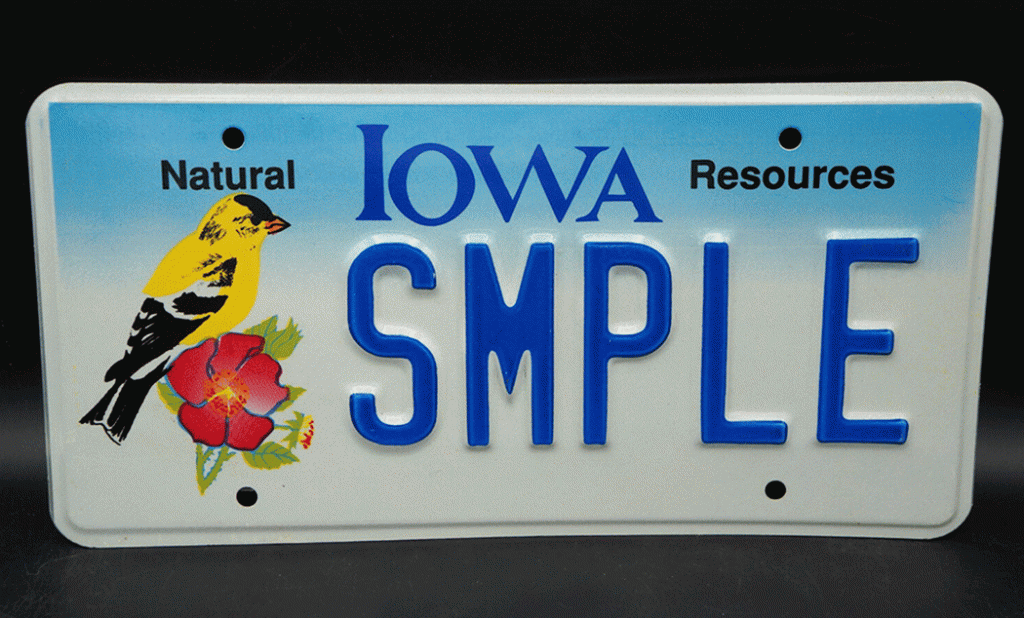
Have you ever driven behind someone with goldfinch license plates and wondered what they meant? You may have seen that same goldfinch on a REAP sign while walking on a path in Jefferson County Park or the Fairfield Loop Trail. Whether that sign piqued your curiosity or not, I’m here to explain this mysterious government acronym.
REAP (a.k.a. the Resource Enhancement and Protection program) was signed into law back in 1989. For over 30 years, the REAP program has invested in improving Iowa’s quality of life by funding the development of parks and open space, enhancing habitat and water quality, increasing outdoor recreation opportunities, and preserving Iowa’s cultural heritage.
Where Does the Money Come From?
REAP is funded by the state’s Environment First Fund (from taxes on Iowa gaming receipts) and from the sale of the natural resource license plates that feature a goldfinch, deer, brook trout, bald eagle, or pheasant. The Iowa legislature sets a dollar amount for REAP each year, up to $20 million. That sure sounds big and beautiful to me!
Where Does the Money Go?
The four state agencies responsible for stewarding the funds are Transportation, Administrative Services, Agriculture and Land Stewardship, and Natural Re-sources. The funds these organizations manage go into eight different programs based upon percentages specified in the law.
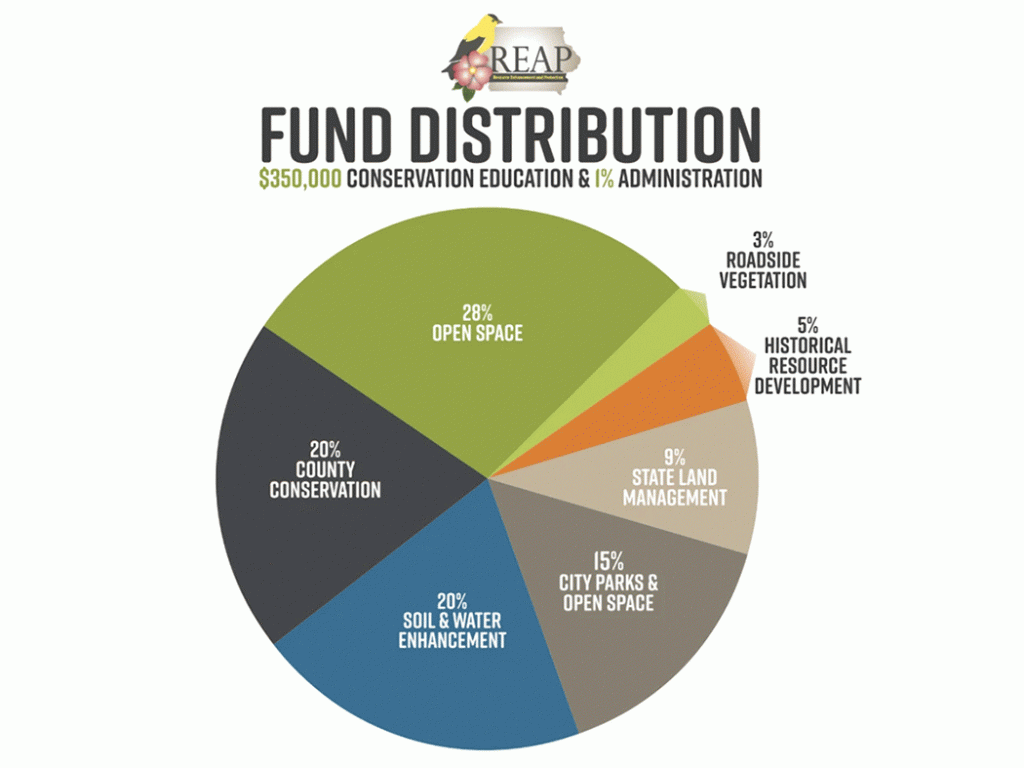
Out of the budget set for the year, the first $350,000 is set aside for conservation education, which involves projects such as training teachers and engaging young people in various communities.
The Integrated Roadside Vegetation Management (IRVM) program receives 3 percent of the annual allocation. Roadsides re-established with native prairie species provide habitat for wildlife while also slowing and cleaning the water that comes off paved roads. The roadside program also provides funding to cities and counties for entrance and trail right-of-way beautification.
Five percent of the allocation goes toward historical resources such as developing museum exhibits, digitally preserving newspaper records, or preserving historic infrastructure.
Fifteen percent of the allocation is for city parks and open spaces, supporting the development of parks, trails, and other open spaces.
Twenty percent goes toward soil and water enhancement. Another 20 percent goes to local county conservation boards. And back to the state level, there is 9 percent for state land management and 28 percent for open spaces. (See the pie chart above.)
How Is REAP Used Locally?
It hits closer to home to know how REAP funds are being used in Jefferson County. During my time as a forester with the Iowa Department of Natural Resources (DNR), I helped private landowners secure REAP funds for timber-stand improvement projects, tree plantings, and windbreaks. An average year would probably fund around 80 acres of timber-stand improvement, 5 acres of tree plantings (3,000 total trees), and a few windbreaks. If the demand was high enough, we could often secure extra funding to do even more!
So if you or someone you know would like to actively steward their timbered acres (5 acres of timber is the minimum requirement), or wants to plant a windbreak or at least 3 acres of trees, REAP is a great program to get started in! Begin by contacting your county district forester.
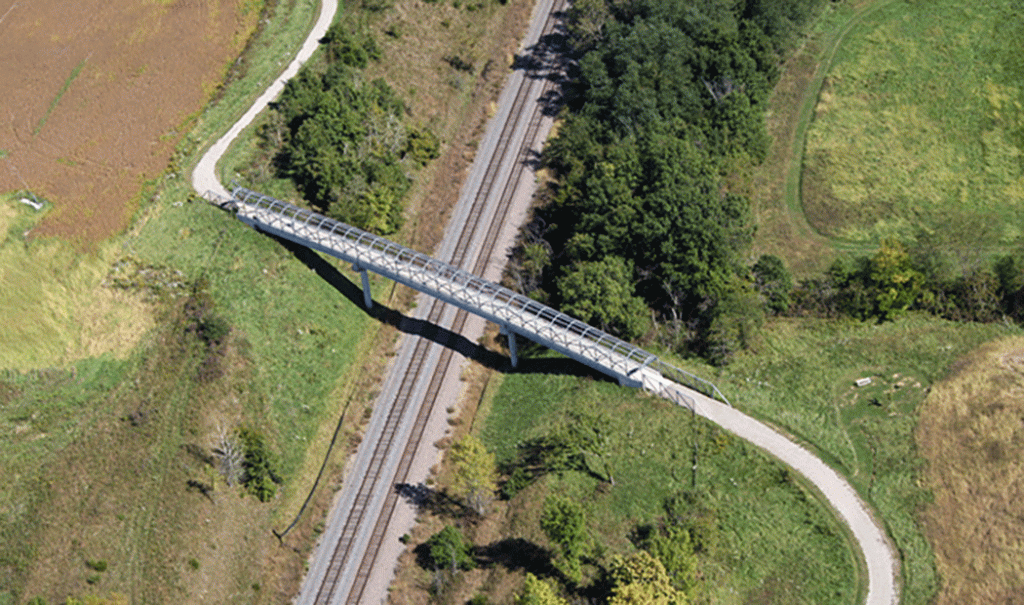
The REAP program has also funded conservation work on city and county properties for improved habitat and trail systems. Locally, these programs have served Fairfield well: the first major grant for the Loop Trail came via REAP, as did a second one years later, and it helped fund the beautiful bridge over the BNSF railroad tracks. A very recent REAP grant involved a new dock, signage, and habitat improvement at Pleasant Lake.
How to Buy a REAP Plate
The REAP program is a well-used and important resource for Iowans. Please consider supporting it by purchasing a REAP license plate, using the program yourself, telling your circle about the opportunity, and being an advocate for the projects in your community and the state at large.
You can purchase REAP plates at your county treasurer’s office any time. The initial cost is $45, with an annual renewal of $25. For more details, visit the Iowa DNR at IowaDNR.gov or contact your local Natural Resource Conservation Service (NRCS) office.
Cassidy Widner is a former district forester.