
As a member of the Sustainable Libraries Initiative (SLI)—a growing national movement that empowers libraries to model environmental stewardship, social responsibility, and community resilience—Fairfield Public Library has committed to integrating sustainability into every facet of its work. After hearing SLI founder Dr. Rebekkah Smith Aldrich speak at the 2023 Iowa Library Association conference, I decided to bring the framework home, helping Fairfield join a cohort of Iowa libraries now working toward formal SLI certification. The Prairie Remnants Book Club emerged directly from this commitment: a literary forum designed to spark conversation, deepen ecological literacy, and engage residents in imagining a more resilient future for Southeast Iowa.
Launched in June 2025 as part of Fairfield Public Library’s sustainability roadmap, Prairie Remnants invites participants to explore ideas, challenges, and possibilities for ecological renewal through the lens of literature. The group has read seven titles since its inception; below are highlights from four of the selections that shaped this year’s conversation.
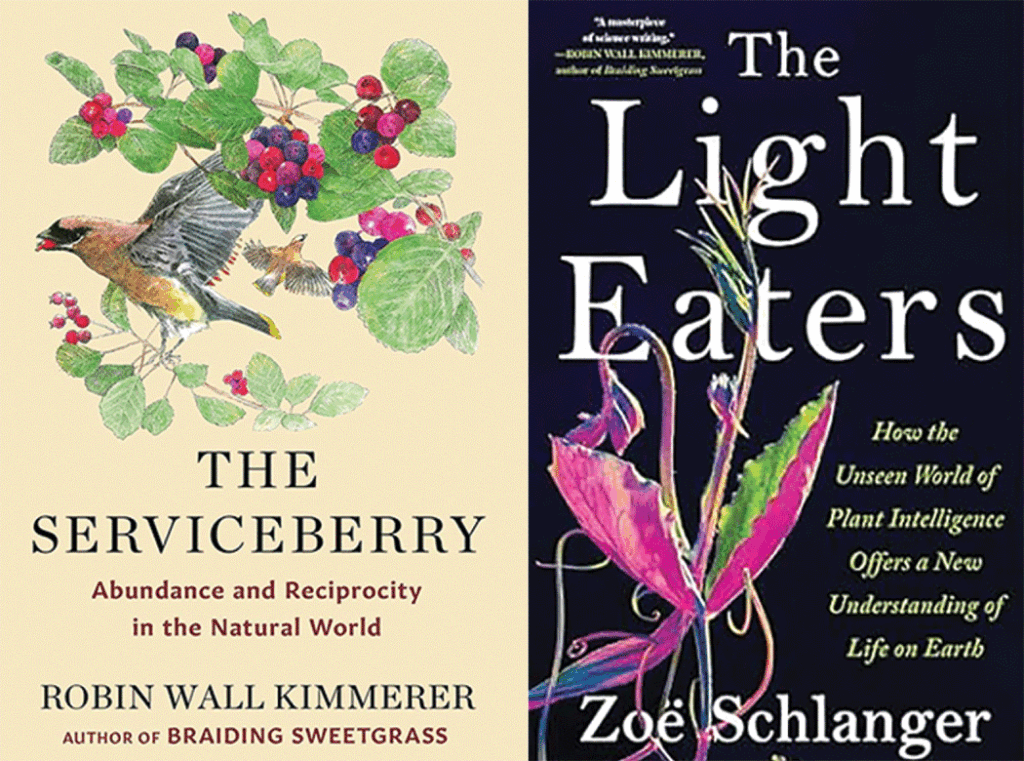
The Serviceberry: Abundance and Reciprocity in the Natural World by Robin Wall Kimmerer (Simon & Schuster, 2024). Kimmerer, a botanist and member of the Citizen Potawatomi Nation, explores how principles of reciprocity and gift-based economies can reshape our relationship with the natural world. Her reflections on the humble serviceberry tree become a metaphor for shared stewardship, gratitude, and living within ecological limits—ideas that framed the book club’s earliest discussions.
The Word for World Is Forest by Ursula K. Le Guin (TOR Books, 1972). Le Guin’s novella blends ecological allegory with speculative fiction, depicting a colonized planet whose Indigenous inhabitants possess a profound spiritual and material relationship to their forests. The group wrestled with parallels to Iowa’s own history of land use, extractive systems, and the cultural value of native landscapes.
Nature’s Best Hope by Doug Tallamy (Timber Press, 2020). Entomologist Doug Tallamy offers a vision for rebuilding biodiversity right outside our doors. By transforming yards, boulevards, and community green spaces into native plant habitats, Tallamy argues that ordinary citizens can reverse ecosystem collapse. The book resonated strongly with local gardeners, naturalists, and the library’s own emerging outdoor-learning initiatives.
The Light Eaters: How the Unseen World of Plant Intelligence Offers a New Understanding of Life on Earth by Zoë Schlanger (Harper, 2024). This groundbreaking work explores the emerging science of plant sentience and communication. Schlanger illuminates how plants respond, remember, and adapt—prompting the group to reflect on the extraordinary intelligence embedded in Iowa’s prairies, woodlands, and wetlands.