
Bitterly cold winter days are the perfect time to start thinking about your garden, whether it’s ordering seeds, planning for more beds, or organizing landscaping projects. Perhaps you’ve heard about the native plant movement sweeping the country and you’d like to make a step in that direction—by planting a pollinator garden, a native Iowa tree, or a bee lawn. We talked to Iowa horticulturalist Steven M. Taylor for tips on getting started with native plants in your own backyard.
First, let’s talk about why it’s important to plant native trees and shrubs.
One of my life lessons is finding out that I am not separate from the rest of the world. What we do can have an impact on everything else. Ecology is the study of the relationships between living organisms, including humans, and their physical environment; it seeks to understand the vital connections between plants and animals and the world around us. Doug Tallamy is an entomologist who for the last 40 years has conducted research into our native plants, the insects that feed on them, and the animals that feed on these insects, especially moths and butterflies.
What he found is that local native plants, insects, and animals all evolved together, and that imports from other parts of the world usually do not support our local ecosystems. In some cases, they contribute to their degradation. This is especially true for some Asian insects, such as the emerald ash borer, which has caused the loss of over 350 ash trees in Fairfield alone.
What changes did you make to your own property, and what did you notice as a result?
In the woodland portion of my property, I first got rid of a few invasive plant species, such as Asian honeysuckle, autumn olive, and multiflora rose. Then I removed some—but not all—of the hackberry, elms, and black walnuts, so that the woodland remained open with more sunlight for keystone species to regenerate. Now, a few years later, I have quite a few oaks, hickory, and black cherry saplings, which eventually will replace the older oaks as they age and decline. Some of these saplings I have surrounded with a cage to protect them from deer.
There was a dying black cherry that I left for woodpeckers. I now have red-headed woodpeckers that have made a home for themselves in this tree. Bluebirds have also returned and are nesting on the forest edge.
Also, we had enough rain in the spring of 2025 to help to support more butterflies and moths. I saw a big increase in all kinds of butterflies, such as blue azures, all swallowtails, fritillaries, monarchs, and others.
In short, there’s just a lot more life on my property. The land is buzzing with bees, too.
What native trees do you suggest planting in city gardens?
I like to recommend keystone species that support the greatest number of caterpillars that birds use to feed their young. Pin oaks and shingle oaks are good species for urban areas because they grow more quickly than other oaks, support over 250 species of caterpillars, and are more drought tolerant than maples. You can also grow many more plants underneath an oak because the roots are deeper in the soil rather than the surface-feeding roots of maples.
Other keystone species I recommend are prairie willow or pussy willow shrubs. They can be included in just about any sized property. Wild plum and chokecherry can easily be grown in smaller urban gardens.
All of these plants will need some protection from rabbits and deer when they are young. Once they’re established with a woody bark, protection can be removed.
What are some native fruit trees to plant that birds can rely on for winter sustenance?
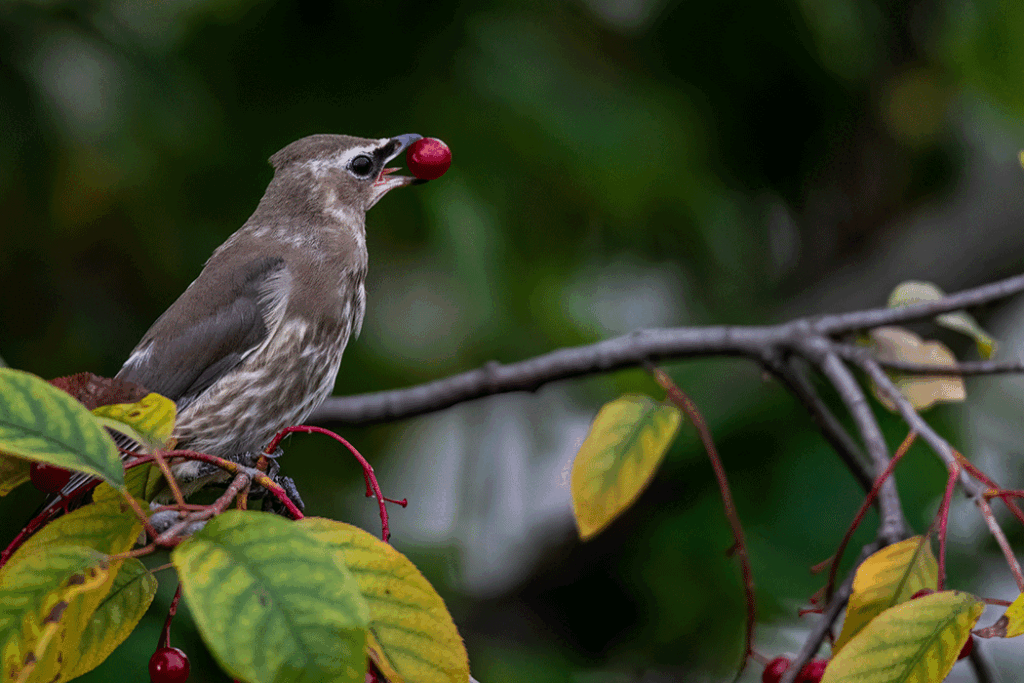
Wild black cherry, wild plum, chokecherry, hackberry, elderberry, hawthorn, native roses (with pink flowers), sumac, gray dogwood, and nannyberry are some of the native fruit trees and shrubs that help feed the birds in fall and winter.
Do you advise turning lawns or parts of lawn into native plantings?
I find this best to do a little at a time.
I prefer native shrubs that form thickets. My favorites are American hazelnut, gray dogwood, fragrant sumac, and flameleaf sumac. I plant these in lawn areas and then put down cardboard over the lawn and add mulch on top to form a bed. After the grass has died underneath, I remove the cardboard and plant some ground covers to fill in, such as sedges, heath aster, gray goldenrod, prairie dropseed, wild bergamot, and sweet coneflower.
I’m considering “bee lawns” in areas where I want a small lawn. In sunny areas, that means planting our native buffalo grass and blue grama grass, with “native weeds” incorporated into the lawn such as yarrow, selfheal, silky aster, gray goldenrod, and prairie violet. This type of native lawn requires much less watering and mowing, and once established, you get to hear the “flight of the bumble bee.”
Learn more about native plantings on Doug Tallamy’s website HomegrownNationalPark.org.