
A lot of ink has been spilled about the death of the rom-com. Sure, there have been some recent attempts at reviving the genre, but one thing is certain—the titans of the 1990s rom-com craze created films that remain glued to Gen Xers’ souls and provide false nostalgia for Gen Zers (like myself) for relationships we believe only exist at the end of Nora Ephron’s pen.
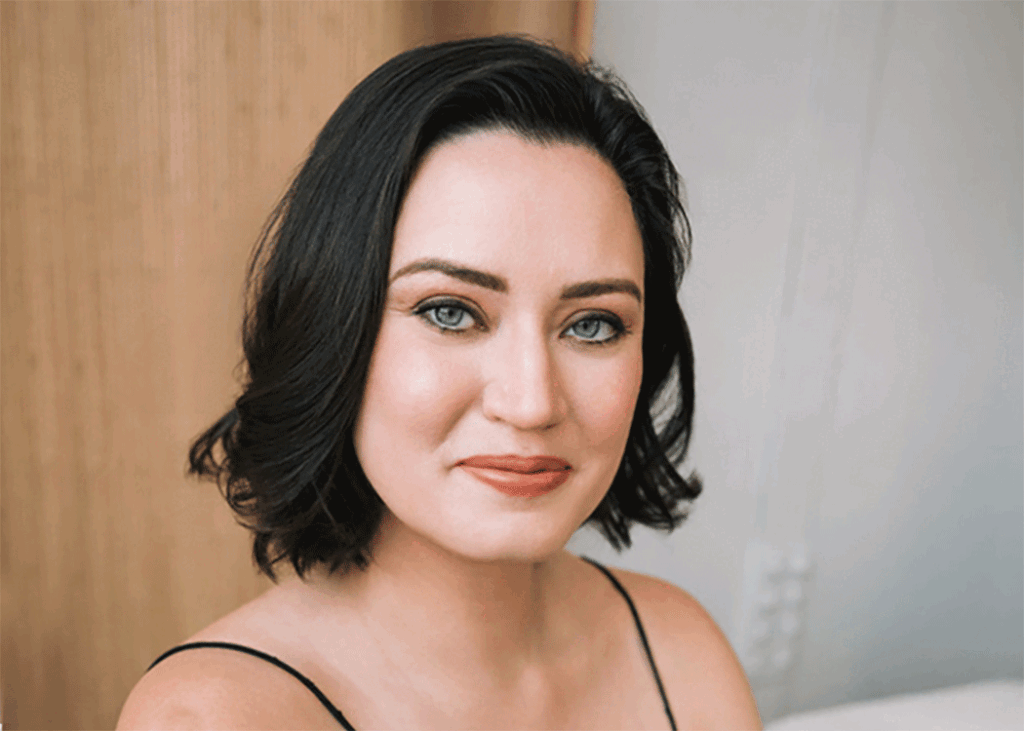
Enter contemporary romance writer B.K. Borison, author of Good Spirits, which went viral during the holiday season. Her newest series, Heartstrings, takes on the lofty task of recapturing the magic found in those ’90s movies. Borison’s initial effort, First-Time Caller (published February 2025), is a retelling of the 1993 film Sleepless in Seattle, written by Nora Ephron and starring Tom Hanks and Meg Ryan.
First-Time Caller is fun, at times compelling, and generally well-constructed. It isn’t trying to be Sleepless in Seattle, it’s just inspired by it. Still, it’s hard to evaluate the book without acknowledging that the film remains cultural ubiquitous, even 30 years after its release.
Sleepless in Seattle, I would argue, is a film about a father-son relationship disguised as a rom-com. While Meg Ryan’s character, Annie, spends the film reckoning with her unhappiness with her fiancé, Tom Hanks’s character, Sam, spends the film helping his son, Jonah, move forward in the wake of his mother’s death. Yes, this includes coping with the reality that Sam is going to start dating again, but he does not spend the majority of the film working out the finer details of re-entangling his life with someone new. Instead, he spends most of his scenes sorting out how to be the best dad he can be to a little boy who is all too aware that his father is grieving the loss of a partner. As a result, Sleepless in Seattle feels like only half of the end-game relationship is in a romance film.
Perhaps that strange construction is what makes it so successful. In other words, instead of the film feeling like an aggressively rose-colored-glasses look at life, it comes across as enmeshed in the muck that makes real life complicated, hard, and also magical.
First-Time Caller, on the other hand, reconstructs the story to focus on events leading to the happy ending of the two main characters, Adian and Lucy. Borison makes a bunch of interesting choices in order to accomplish this. The book essentially gender-swaps the setup of the movie. The catalyst for its plot revolves around a single mother, who essentially has no love life, and her daughter. Borison also removes the fraught parental relationship found in the film. Lucy is not a widow, and she has a more-than-ideal relationship with her daughter’s father. Her daughter is also several years older than Sam’s son, which makes the character feel tangibly less vulnerable to shifts in her mother’s life.
Additionally, instead of being a side-character radio host who ultimately connects the two romantic leads, in First-Time Caller the host and his show are at the center of the plot. As a result, the novel reads as a love letter to radio—a detail I find charming, especially in this media climate.
All of which is really to say this: I enjoyed First-Time Caller. I deeply admire the gutsiness of the book’s conceit (anytime you go toe-to-toe with people’s favorite stories you are playing with fire). But if you’re looking for the same warmth that viewers get from Sleepless in Seattle, I don’t think most readers will find it.
As a work of contemporary romance, the book holds its own. It’s witty, the book’s Baltimore setting manages to serve as a piece of effective world building (which I assume will continue to pay off in the books to come), and the text begs the reader to think about the barriers that stand between people who want to be together but can’t figure out how to make it happen without trivializing it as “situationships are stupid, just use your words” —which I think is really valuable.
To the degree that the book struggles at all, I found the pacing to be off-kilter at times. But, then again, real-life relationships are often victims of off-kilter timing, too.
Additionally, First-Time Caller didn’t do anything to reinvent the tropes it is constructed around. This is hardly a sin: Many romance readers are looking for trope-driven books with predictable-ish beats. For me, this often results in a book that I have a good time reading but am unlikely to return to.
So when I pick up Borison’s newly published book in the series, And Now, Back to You (February 2026), which is a When Harry Met Sally… retelling, I’ll be keeping all of this in mind. To be honest, When Harry Met Sally… is my favorite movie of all time, and it’s already hard for me to imagine a book that rearranges its DNA. Still, I look forward to returning to the Heartstrings universe, because Borison has earned my trust as a writer who will bring me a smile, a laugh, and a reason for embracing the romance genre. Rest assured, I’ll be coming back to this column to share Borison’s continued effect on my own heartstrings.