
Southeast Iowa is in the transition zone between the northern boreal forest and the southern temperate forest, the eastern deciduous forest and the western tallgrass prairie. Fossils show that when glaciers melted 12,000 years ago, Iowa was a boreal forest with white spruce, aspen, and white birch. As it got warmer and drier, most of the boreal species moved north. However, today we still have remnant groves of white pine and quaking aspen. From the south, some oaks from Texas now reach into southern Iowa, such as the blackjack oak, post oak, and dwarf chinkapin oak. From the eastern deciduous forest, we have sugar maple and hop-hornbeam. From the western part of the state, plains cottonwood and bur oak. As the climate continues to change, most likely getting warmer and perhaps drier, southeast Iowa may eventually look more like Tulsa, Oklahoma, at the southwestern part of our ecoregion.
Due to lower rainfall, Southeast Iowa is less biodynamic than the eastern deciduous forest. Red maples and beech trees—not native but often planted—struggle in the heat and droughts of Southeast Iowa. We do not have native alders and only one birch, the heat-resistant river birch. We do not have Ericaceous plants such as blueberries and rhododendrons due to limestone bedrock. And the elm, ash, and chestnut are disappearing due to invasive diseases or insects that came to our area from other parts of the world. Given all these challenges, how do we help maintain or increase our biodiversity?
Oaks of All Kinds
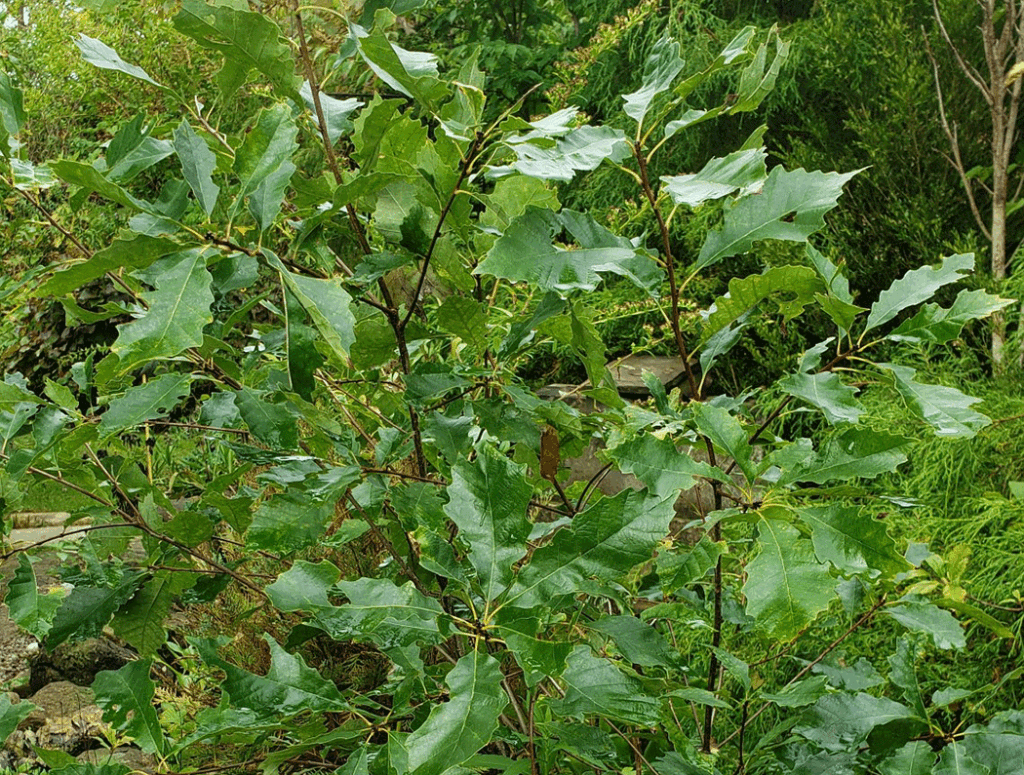
The good news is that we still have oak trees, which have deep tap roots that easily withstand droughts and heat. Most of the oaks we have also do well in Tulsa and Texas. Even if you have a small lot, you can still grow the shrubby dwarf chinkapin oak. It is highly adaptable to poor soils, drought tolerant, and cold hardy. It thrives in Iowa’s climate while providing high-value wildlife benefits through rapid, early acorn production. There are more caterpillars that feed on oak leaves than any other tree. Birds depend on caterpillars to feed their young. Many mammals eat the acorns. Three other oak species that thrive in Southeast Iowa are the overcup oak, blackjack oak, and post oak. All of these oaks are hardy, heat resistant, and drought tolerant once established. All oaks need protection from deer when they are young.
Native Willows
Willows are also strongly biodynamic. While the black willow grows throughout Iowa along most of our rivers and creeks, the prairie willow is not well known. This shrub is common throughout Iowa prairies. Unlike most willows, it can tolerate drier conditions. Prairie willows can easily be added to small-sized yards as they typically grow just 5 feet tall and 6 feet wide. They will need some protection from deer when young. Over 200 species of caterpillars feed on willows in our area. Many birds nest in willows also.
Cherries and Plums
Cherries are another group of trees that are very biodynamic. The black cherry and American plum are common trees that grow throughout Iowa, but the Mexican plum is also native in the southern parts of the state. The Mexican plum is similar to the wild plum, but does not form thickets and has slightly larger flowers and larger fruit, making it more ornamental. The fruits are a bit sweeter and taste more like peaches than the American plum. It will need some protection from deer when young. Don’t let the name confuse you, it is native in Southeast Iowa!
Maples, Elms, and More
Most everyone is familiar with the sugar maple, but the black maple is better adapted to southeast Iowa. This tree looks very similar to the sugar maple, but is often missing the two lower lobes on the leaf. The bark is darker and the fall color is not as orange as the sugar maple, but it is more yellow. It is much more heat and drought tolerant and supports just as many insects as the sugar maple.
There is good news regarding American elms! We now have several elms to choose from that are resistant to Dutch elm disease. Probably the most resistant is a cultivar called Valley Forge elm. This cultivar was selected from thousands of American elm seedlings screened for resistance to the disease by the Agricultural Research Service in Delaware and Ohio. Researcher Denny Townsend dubbed the genotype Valley Forge to signify its toughness. It was released to the public in 1995 by the U.S. National Arboretum. Over 150 species of caterpillars feed on elms in Iowa, so this cultivar and other DED-resistant cultivars are helping our ecosystem make a comeback.
In Fairfield alone, we have lost over 350 ash street trees in the last 10 years due to the emerald ash borer (EAB). Researchers have recently discovered rare “lingering ash” trees—individual trees that survive long-term EAB infestations. These trees exhibit natural resistance by killing larvae or resisting feeding, offering hope for breeding programs to restore ash species. Clones and saplings are now being tested to reintroduce resistance to forests. The U.S. Forest Service, Cornell University, and the Nature Conservancy are key organizations involved in identifying and propagating these resistant trees.
Even more good news, the Ozark chestnut (Ozark chinquapin), once thought functionally extinct due to chestnut blight, is making a comeback through the discovery of rare, naturally blight-resistant trees. Since the 2000s, naturalist Steve Bost and others have located surviving, mature Ozark chinquapin trees in Arkansas and Missouri that show natural resistance to the fungal blight. The Ozark Chinquapin Foundation uses these rare, surviving trees to breed a new generation with higher resistance. The Ozark chinquapin, while not native to Iowa, may some day be available to grow here. Chestnuts support over 50 species of caterpillars that feed on the foliage, and the nuts feed many mammals, including people. The Ozark chestnut is a good example that if we help a little, nature can recover much of its biodiversity. We just have to care enough to get the job done.