
Have you ever caught yourself sighing at the sight of a weedy bed or feeling a little grumpy when someone says, “Isn’t gardening relaxing?” Even Master Gardeners can find the garden starting to feel like another job, another obligation, another task tugging at us. When that happens, the garden stops being a refuge and becomes a to-do list with dirt on it.
Here is the reframe that has kept me happily gardening for the long haul: Joy and ease are legitimate goals. They are also signs of good stewardship. Burned-out gardeners abandon beds, stop experimenting, and lose the thread of why they started. A garden that supports the gardener tends to last, and lasting is where the real mental and ecological benefits show up.
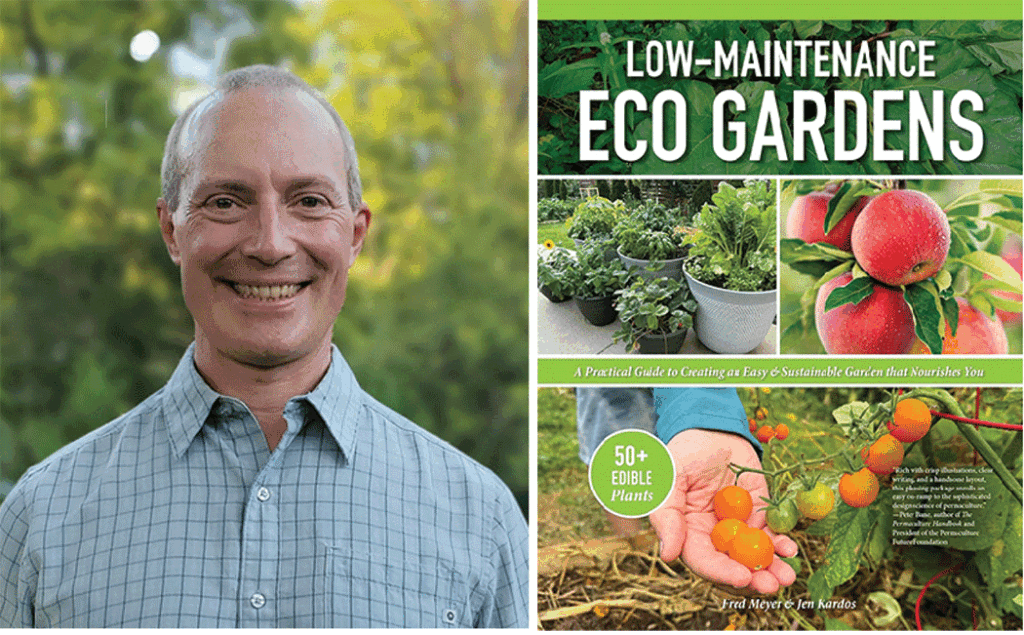
With this theme in mind, I’ve co-authored with Jen Kardos a book titled Low-Maintenance Eco Gardens: A Practical Guide to Creating an Easy & Sustainable Garden That Nourishes You. It gathers what I have learned over many years as a Master Gardener and through the nonprofit Earth Mind (formerly Backyard Abundance) in Iowa City.
The heart of the book is simple: With thoughtful design and realistic routines that fit your life, gardens can better care for themselves while also caring for you.
The following core practices have helped me create these self-caring gardens, and I return to them again and again.
Protect the Soil. Keep soil covered with mulch like woodchips, straw, or leaves. Keep living roots in the ground as often as possible, and disturb soil less. Covered, living soil builds organic matter efficiently, holds moisture, buffers temperature swings, and quietly reduces weeding.
Start Small. If a new project feels small, consider making it even smaller. Success builds confidence, and it is far easier to expand a thriving, manageable garden than to recover from an overwhelming one. A few well-tended containers can offer as much satisfaction and harvest as a big new bed, especially when they match your schedule.
Match Plants to Conditions. Just like humans, plants flourish with less effort when they are in the right environment. Get to know each bed’s personality: how much sun it receives, what the soil is like, whether it stays dry or damp, how often you naturally visit it, and any quirks like wind, pets, or distance from water. I call this the “Plant Matchmaker,” and it has become my favorite way to give new plant friends that inherently appear in my life a good chance to thrive.
Make Maintainence a Rhythm. Give yourself a small routine. Ten minutes, one task, then stop while it still feels good. This keeps the garden from becoming a weekend-long chore, and it keeps you connected without getting depleted.
An Evening with Jen Kardos and Fred Meyer
Join Jen Kardos and Fred Meyer for “Healing in the Garden: An Evening with the Authors of Low-Maintenance Eco Gardens,” an inspiring and practical conversation about creating a self-care garden on Thursday, May 7, 7:30 p.m., at the Iowa City Public Library. All are invited.
To read more about the book, see EarthMind.org.
Reprinted with permission from JCMG-Thymes.com.