Often, I arrive at Torrey Witherspoon’s log cabin in rural Jefferson County and find her between projects, having tea, cheese, or radishes in the home her grandfather Charles built in 1989 on the family’s wooded property. Sometimes she is flushed and still in muddy Crocs and floppy hat, having come in recently from working the gardens. Other times, she calls me into the living room of the high-ceilinged wood-on-wood abode, where I’ve found her surrounded by books researching her current craft obsession.
Torrey has spent most of her 44 years immersed in the study of craft, art, and the science behind them. From knitting, sewing, weaving, and ceramics at a young age, she moved on to crochet, tatting, and natural dyeing in early adulthood, then on to fiber cultivation and fabric production and dressmaking in her 30s.
Currently, all this knowledge intersects in practice on Marigold Farm’s 3.5 acres, part of her family’s 65-acre property, where the gardens provide both food for nourishment and raw materials for projects.
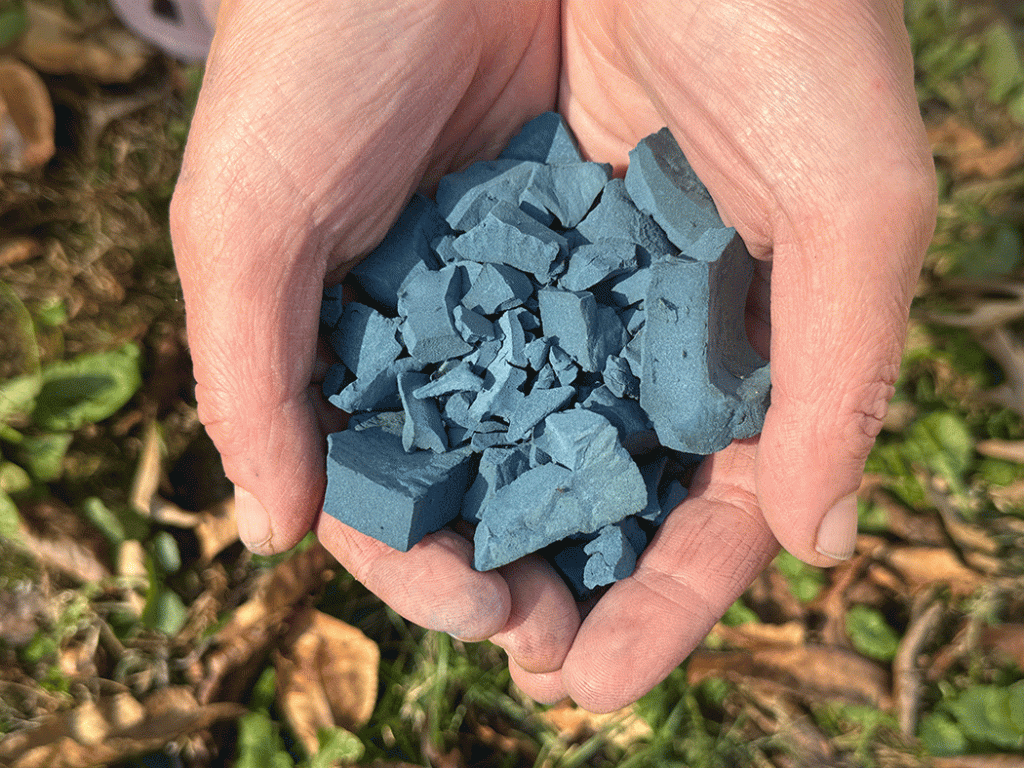
Recently when I stopped by, her hands were stained greenish or “mermaid color,” as she calls it, from processing the indigo plant harvest into dye and pigment. Then she showed me a pile of feldspar rocks she planned to crush and incorporate into a ceramics glaze.
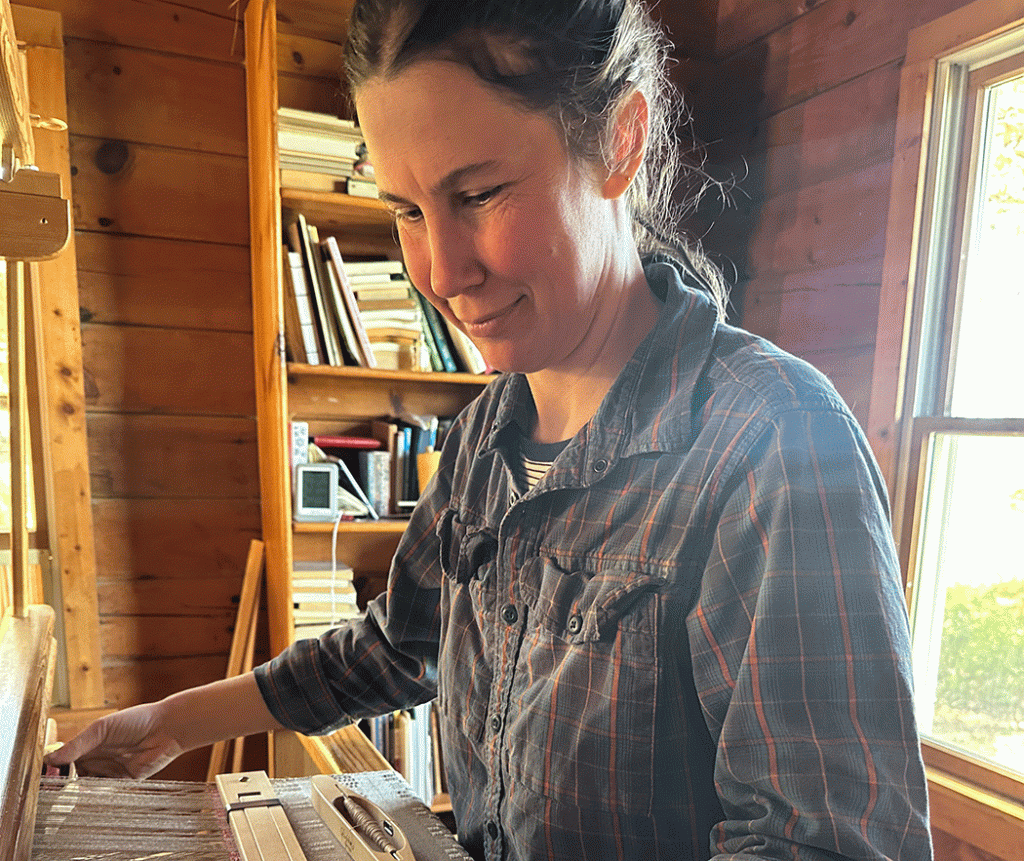
Within the woodsy cabin, the living room space is the heart of the home, commanding the eye’s attention. Tawny wood floors and walls glow, reflecting the indirect light from windows. The lack of intrusive sounds like cars or tractors or people is palpable. Crickets, wind, and dappled sunshine drift in from outside, creating a kind of country-summer white noise.
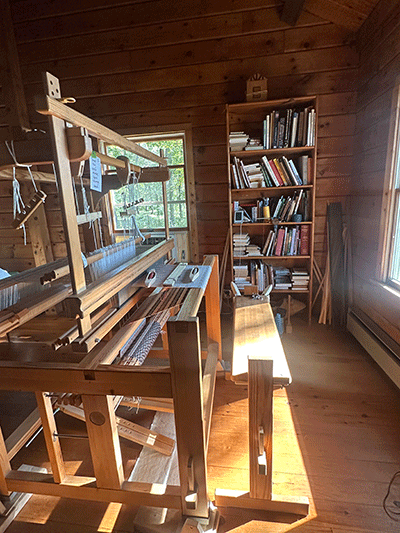 Like punctuation in the home’s monologue, the modest furnishings suggest the pace of Torrey’s lifestyle. On one side of the room are Charlie’s set of mid-century modern couches, a wood stove, a spinning wheel, a low chest, and a side table. Only a tall bookshelf and loom with bench inhabit the other half of the room.
Rag rugs made from fabric scraps left over from dress making join with woolly blankets and quilts from Torrey’s youth to cozy the room, but also nod toward the sophistication of a purposefully crafted life.
She names her mother, Rosie, as her biggest influencer. Owner of the At Home Store in Fairfield, Rosie runs a tight ship of a shop dedicated to tools and accessories exalting home life and fiber craft. Deep in the back of the store, the cubicles that flank the high walls burst with colorful yarns, drawing you in deeper.
“Basically, my mother facilitated every single fiber craft thing,” Torrey explains, revealing that she was around five or six when her mom taught her everything she knew, starting with knitting. “My mom put me on her lap, and reached her arms around and would knit a couple stitches, and then let me knit some stitches, and then she knit some stitches . . . she did most of it.” Torrey also learned to sew by making dolls, and even did a little weaving back then.
“Somebody gave me an entire sweater and said, ‘You can just take it apart.’ So I ripped the entire sweater apart, and then reknit it and unknit it and reknit it and unknit it and reknit it,” the repetitious activity teaching little Torrey how to fix her mistakes and try different stitches.
“Maybe I made some stuff out of it, but more it was the process. Which makes sense, because I’m more interested in the process than the finished product. It’s not really about the thing,” she says, elaborating that then, as now, she’s more keen on the steps and the techniques.
Torrey is quick to clarify that it’s not a choice. “It’s like a flow. This happens and then this happens and then this happens.”
Like an intuitive flow state, I suggest.
“It’s an intuitive flow state,” she agrees, going on to reflect that it “goes across all the different disciplines, all the different mediums I work with.” Working intuitively, she intimates, “is the most true to me.”
Repurposing is a reoccurring theme throughout her work. “So many times with weaving, I’ll have made something using fabric scraps or leftover yarn, often using pieces of things that are in finite quantities,” Torrey says. “Part of the process is how to put that together—that’s maybe a little tricky—instead of thinking I can just go to the fabric store and buy however many yards of something.”
Clearly, the flow state and a fascination with reconfiguration carried over into her voracity for farming. In the few years she began gardening on her farm, she went from novice to expert, growing everything from vegetables to dye and fiber plants. She’s built fences, put up a greenhouse, and planted nut trees and willows for baskets.
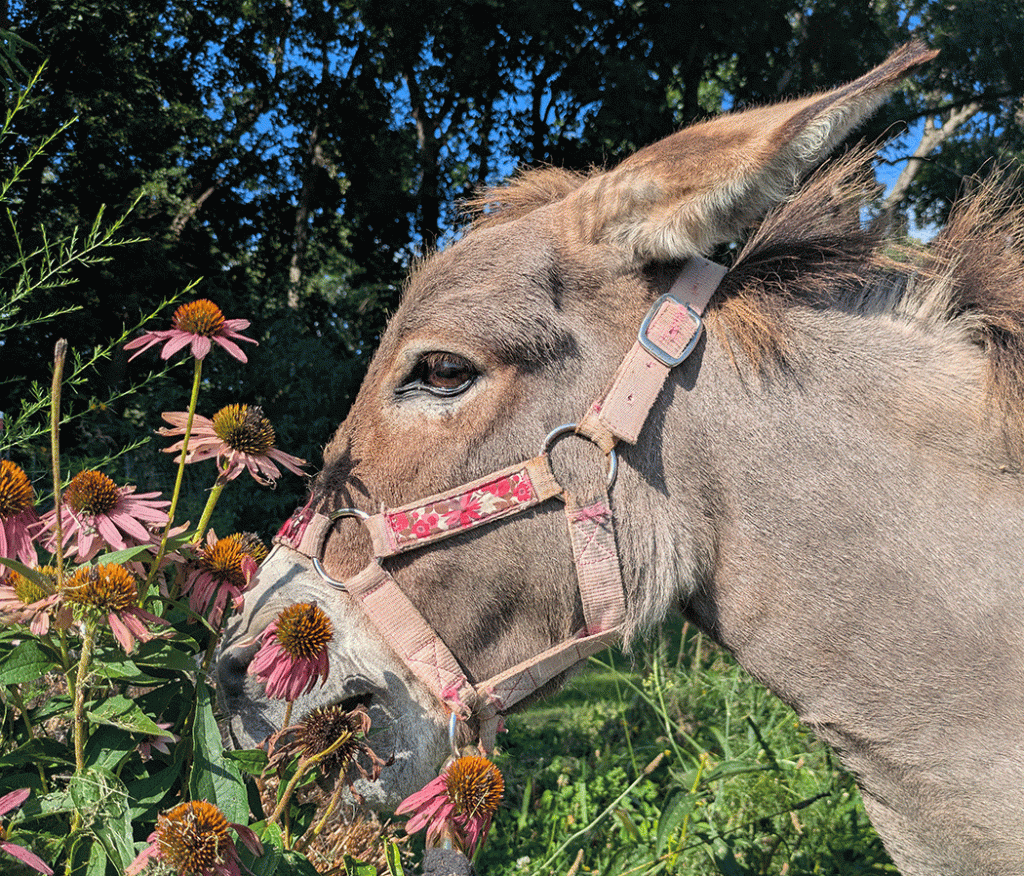
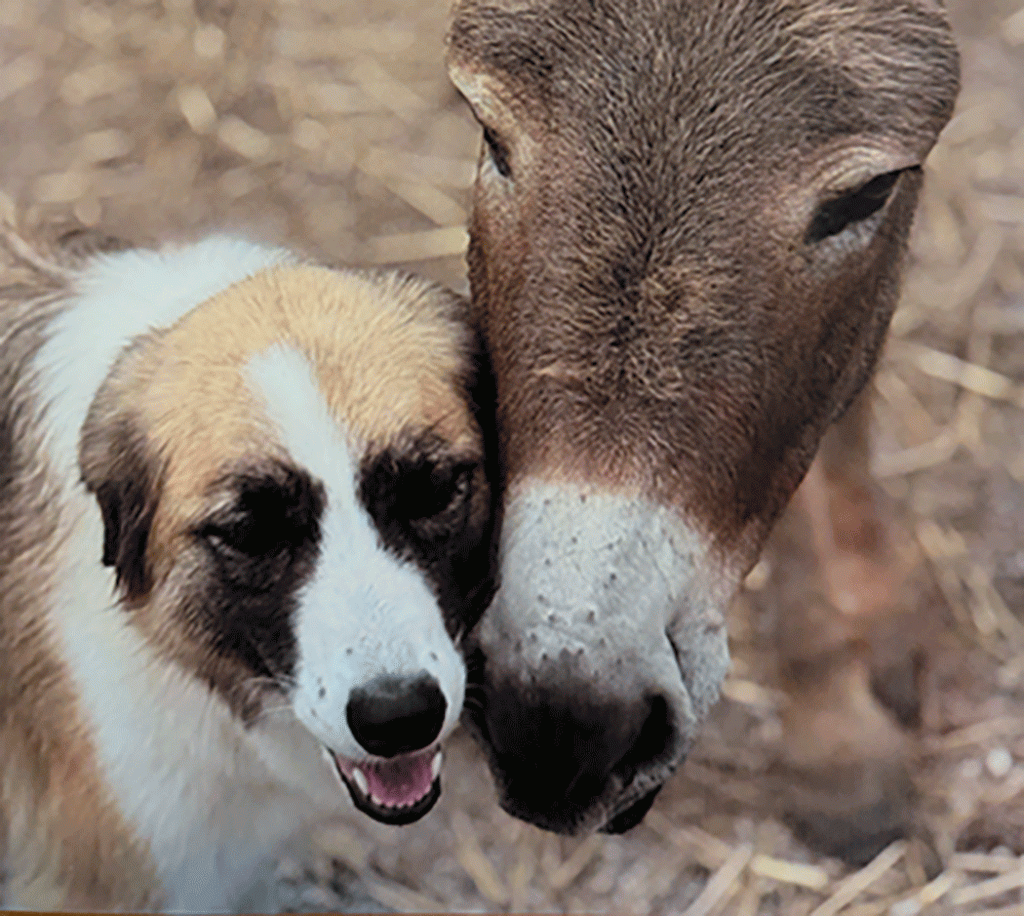
It was in 2022 that the farm’s namesake arrived—Marigold, the miniature donkey and flock protector. The second arrival was Gertie, short for Gertrude, a dwarf Nigerian goat with a curious grin and mischievous glint in her eye.
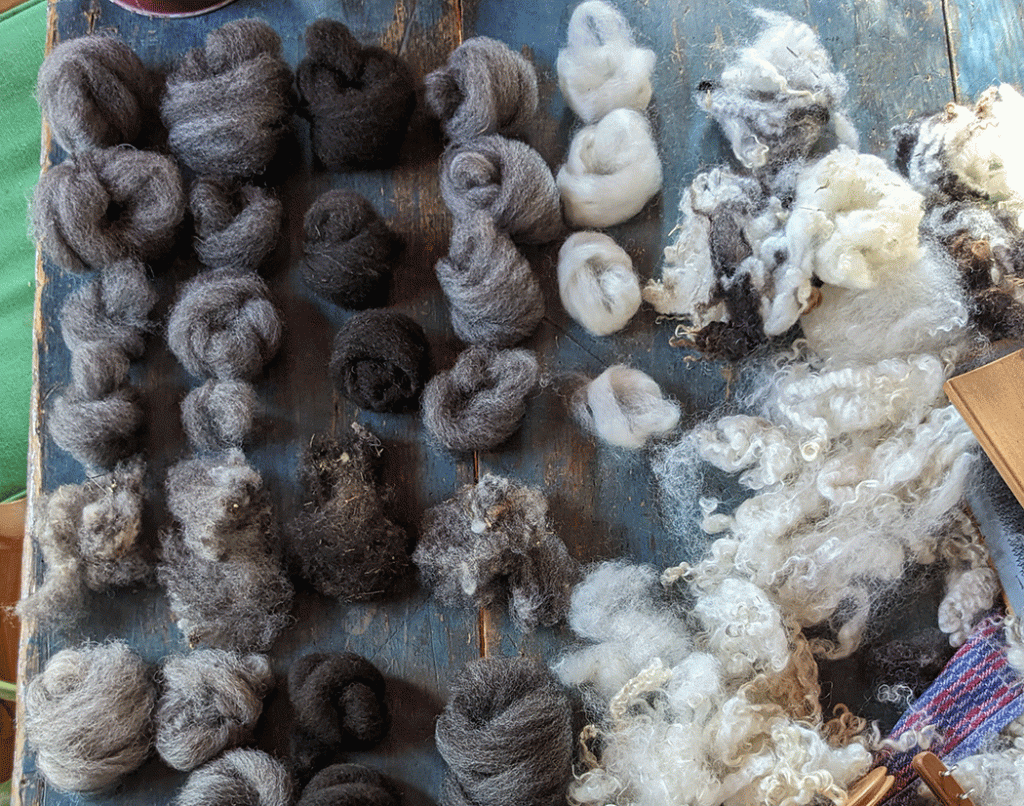
And as love often arrives without warning, a bond between creatures and their tender blossomed, and the dream of raising animals for fiber became a reality. Soon after came the Jacob sheep—Little Leader, Evangeline, and Floris, and then finally, Lil Mama, the shy curly-haired angora goat with bangs in her eyes.
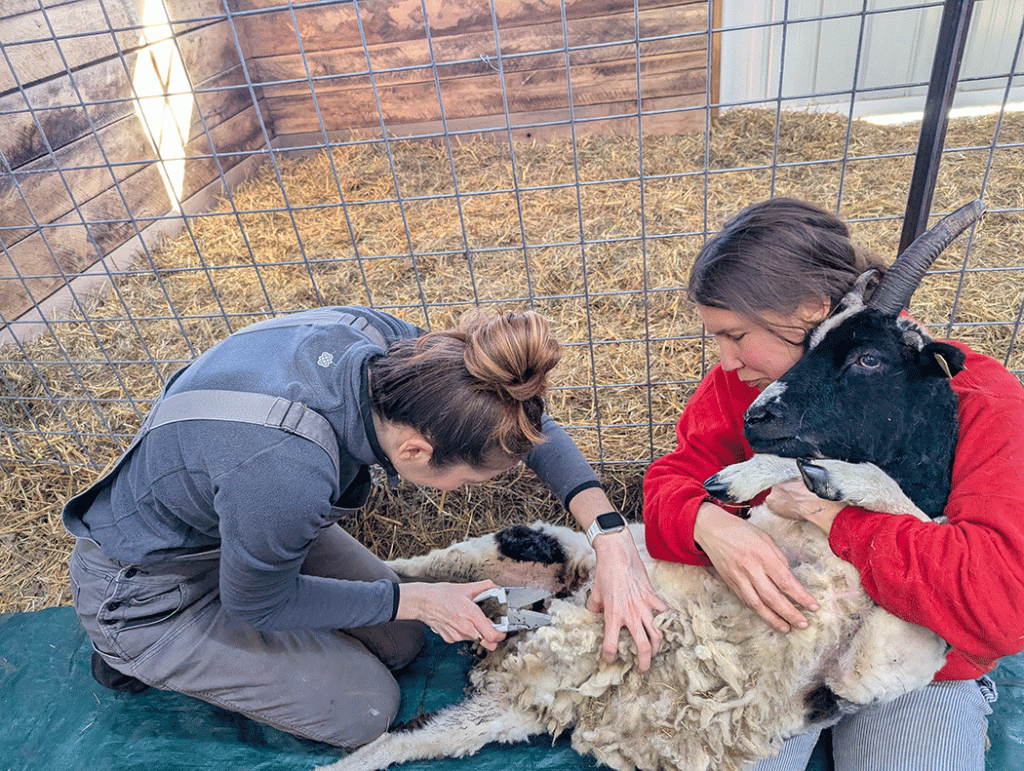
Raising animals for the purpose of harvesting wool aligns with Torrey’s penchant for process. There is the need for proper shelter and enclosures; the morning and evening chores of feeding and watering; vigilance to prevent or treat illness, disease, injury, or pest; dietary and hoof maintenance; and husbandry to consider, along with the delightful parts like walks down the lane, brushings, snuggles, and visits to Rosie’s house on the acreage for treats.
But beyond the care the two Witherspoon women share of their beloved creatures, there is the fiber.
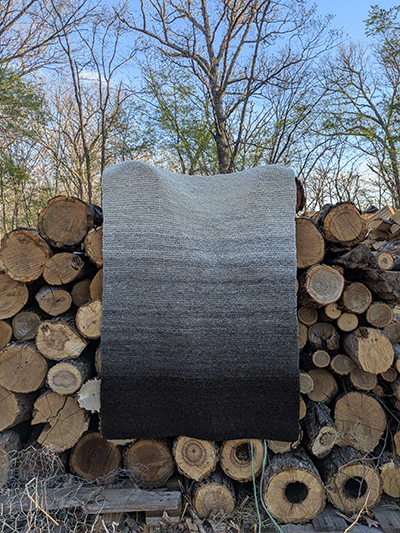
Wool from the first and second year of shearing her sheep is what Torrey collected, washed and cleaned, hand-combed, spun on both a spinning wheel and a drop spindle, and used in two works, now part of the juried art exhibition Threading the Needle: Fiber Art in Iowa at the Cedar Rapids Museum of Art through January 17.
I ask her if she considers herself an artist.
“Sometimes,” she says. “Sometimes I say I’m a farmer. Sometimes I say I make clothes. Sometimes I say I’m a fiber artist.”
Torrey’s dedication and fortitude to adeptly weave old with new allows the intrigue of reinvention to light the way throughout Marigold Farm. No matter how antiquated or simple, everything lives in the process of renewal and revival, and everything belongs and has purpose.