
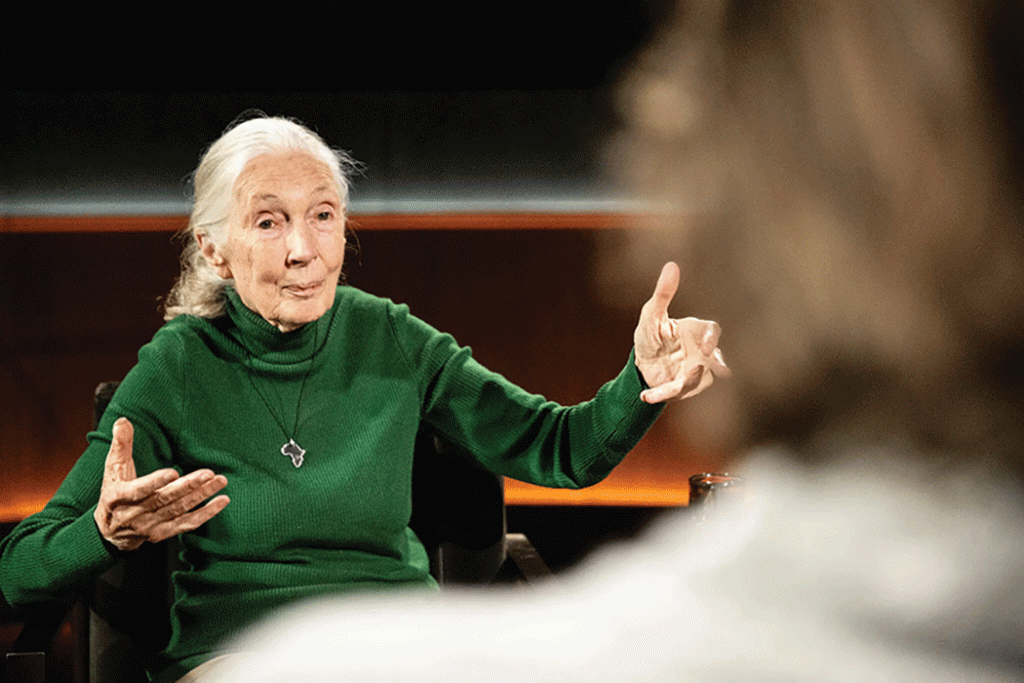
“Equipped with little more than a notebook, binoculars, and her fascination with wildlife, but no college education, Jane Goodall braved a realm of unknowns to give the world a remarkable window into humankind’s closest living relatives.” —JaneGoodall.org
Whether you’re 20, 50, or 90 years old, you probably have heard of Jane Goodall, the extraordinary British primatologist who devoted nearly 60 years to studying chimpanzee behavior by living in their environment, up close and personal, in their African home of Tanzania.
Valerie Jane Morris-Goodall had just started working for the renowned Kenyan/ British archeologist Dr. Louis Leakey. Leakey’s research led him to conclude that humans evolved from primates in East Africa, and that our species is much older than we once believed. (Ah, the age-old competition of modern science versus the ancient Bible … but let’s not slide down that sinkhole.) Leakey’s next plan was to send a capable researcher—a keen observer with no bias or preconceived ideas—to Africa to study primates. The perfect candidate was his 26-year-old assistant, Jane Goodall, with her insatiable curiosity about animals. This adventure set Goodall’s life course. And her observations would update old assumptions shared by the scientific community.
Living in the wilds, Goodall was the first to conduct long observations of the chimps’ behaviors, in fine detail, and every moment was magical. She recognized that these were intelligent creatures, each with their own personality and emotions, each belonging to a family within the chimp culture. She was the first to observe their complex thinking, especially their ability to create tools for survival. She also recognized tendencies they held in common with humans, such as temperament. Both species can be social and harmonious, and both can be aggressive, to the point of waging war. Goodall also recognized manmade challenges that threatened their survival. She became vocal against human behavior that polluted the environment, which launched her institute that promotes a healthy planet.
If you’re interested, Netflix offers a small collection of Jane Goodall documentaries, including Jane, the National Geographic documentary about her youth and her first years in Africa.
Moving on to October 2025, Netflix introduced the new series Famous Last Words. This American version of the Danish series The Last Word features a one-hour interview with a famous personality who wants to offer their parting words in their final years. Unlike other interviews, these sessions are privately recorded and stored until after the subject’s death. Filmed in March 2025, the interview for Famous Last Words: Dr. Jane Goodall was edited from four hours to 60 minutes after its posthumous release on October 3, two days after Goodall’s death at age 91.
Famous Last Words is hosted and produced by Emmy Award-winning writer and director Brad Falchuk, co-creator of several TV series, including Glee and American Crime Story. Falchuck considers Goodall “one of the world’s greatest and most beloved champions of good.” Falchuk seems respectful and informed, setting an informal tone that suggests no topic is off the table. When discussion turns to Goodale’s personal life, we learn she has children from two past marriages and an incredible mother who raised Jane with guidance and encouragement, and even joined her in Africa.
We also learn about “the two Janes.” There’s the real Jane Goodall, and then there’s the celebrity image the public invented, who had the opposite of Goodall’s down-to-earth nature. Goodall also shares that as a youth she loved Tarzan, and she was certain he had married the wrong Jane.
Unlike interviews that might feel rigid or formal, this intimate meeting offers a fly-on-the-wall experience that favors candor and even includes the topic of death. Falchuk steers with a gentle touch. He seems genuine, like a friend, with no expectations of Goodall’s answers or what direction they might take. As the interview nears its end, he exits the stage to leave Goodall alone to offer her private words to the public.
In closing, Goodall shares her conclusions about the life of discovery she was born to live. She reminds us that even in dark times, we can restore the health of the planet we call home before it’s too late. And with a quiet sense of certainty, she closes with a zinger. She assures us that we each have a purpose on earth, and that there is something more beyond this life. Which leaves us wondering … where exactly do we go? Will we like it? Should I bring a sweater? And the biggest question of all, how does she know?