
On any morning in an Iowa public library, a student pulls up a chair to finish homework, a small business owner researches a new market, and a family discovers books that open new worlds. These moments are now at the center of a heated legislative debate.
The current proposals are part of a broader trend over the past five years, during which multiple bills have eroded library funding by limiting levies and restricting local control. This year, several bills in the Iowa Legislature have raised alarms among library professionals. House File 2309, for example, would require state-monitored parental permission for minors to access materials deemed “harmful” rather than leaving those decisions to families. Libraries would be responsible for enforcing these permissions, potentially restricting children from browsing or discovering materials in open stacks. Librarians who allow access without oversight could face civil lawsuits or criminal penalties.
Other proposals would remove longstanding exemptions for libraries in Iowa’s obscenity laws, potentially exposing collections to criminal scrutiny and restricting partnerships between schools and public libraries, including programs that bring bookmobiles onto campuses. Taken together, these bills threaten to reshape the library’s role in community life.
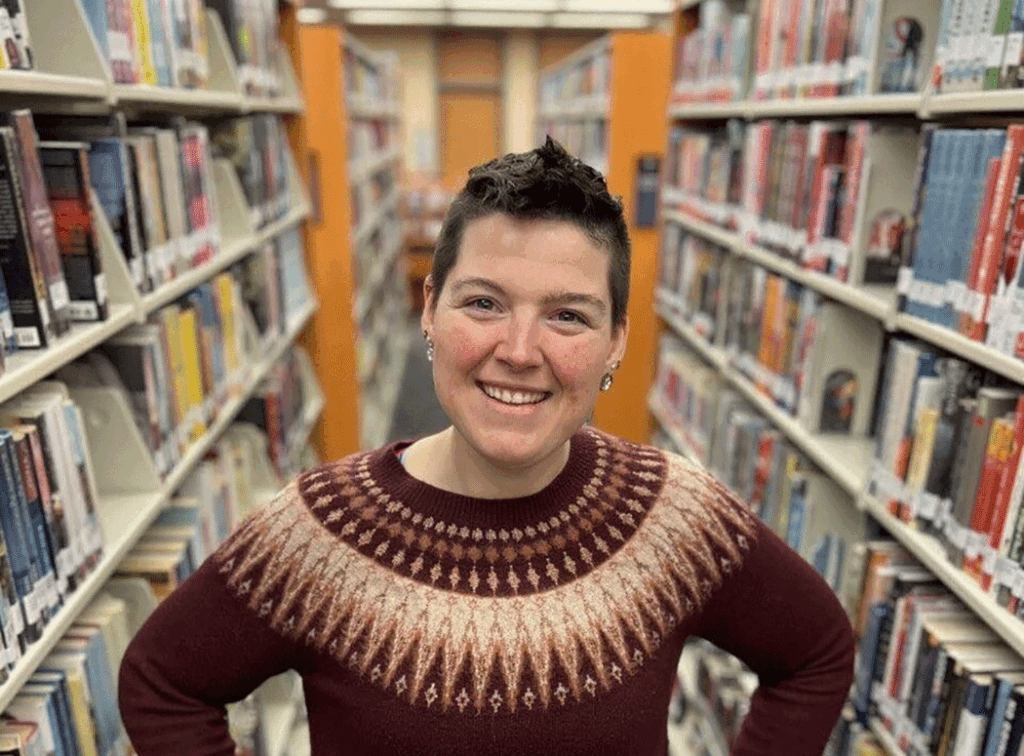
As someone who works in an Iowa library and serves as the president of the American Library Association, I’ve seen the value of libraries firsthand. They are often the most trusted institutions in their communities by readers of all ages. Libraries already have formal review processes for materials that allow communities to raise concerns. Introducing civil and criminal penalties into those decisions risks turning libraries from sanctuaries of learning into sites of surveillance.
These legislative proposals are part of a broader national trend. Across the country, libraries have experienced a dramatic rise in attempts to restrict access to books and resources. In 2023 alone, the American Library Association documented over 1,200 attempts to censor materials. In conversations with community members, I often explain the difference between a reconsideration request, a challenge, and a ban. Libraries have structured processes so that communities can question materials while still protecting access to information. That balance has guided American libraries for nearly a century.
Iowa’s legacy in defending intellectual freedom is particularly strong. The Library Bill of Rights, drafted in Des Moines in 1938 by librarian Forrest Spaulding, established principles that continue to guide libraries nationwide. The document was a response to pressures to censor ideas and restrict access, especially for minority viewpoints. That heritage underscores that protecting library access is part of Iowa’s civic DNA.
In Iowa, pressure around library materials is felt across communities. In 2023, the American Library Association documented 16 formal attempts to restrict access to books in Iowa public libraries, challenging 259 titles. Meanwhile, a statewide law passed in 2023 led to the removal of more than 3,400 books from school libraries, including classics and diverse works, before key parts of that law were temporarily blocked in federal court. These numbers reflect real consequences, illustrating how legislative action directly intersects with what Iowans can read, explore, and learn.
Currently in Iowa, more than 1.7 million residents hold library cards, and libraries welcome over 12.6 million visits annually, lending nearly 16 million physical items and 4.7 million digital items, while hosting more than 117,000 programs attended by 2.2 million people.
Communities across Iowa are already speaking up. Librarians, trustees, and advocates are united in insisting that decisions about library collections remain guided by professional standards and local trust, not fear of litigation or political pressure.
Library workers are uniquely positioned to safeguard the trust of their communities. In a world where content is abundant but context is scarce, libraries provide the guidance that turns an overwhelming content age into an information age, transforming raw material into meaningful knowledge.
Libraries reflect the values that define Iowa: curiosity, generosity, and an enduring belief that knowledge strengthens communities. They connect neighbors, support economic growth, and provide spaces where people can learn and create without barriers. They are as essential now as when Spaulding’s Library Bill of Rights was adopted by the American Library Association as the national standard for enabling people to read freely.
The legislative debates present a clear choice: Iowa can maintain libraries that encourage exploration or the state can impose restrictions that risk silencing voices and undermining trust. Protecting libraries means protecting the civic, cultural, and economic life of Iowa itself. From Sioux City to Des Moines, the message is clear: Libraries matter and Iowans will ensure they thrive.
Sam Helmick is the current president of the American Library Association.