
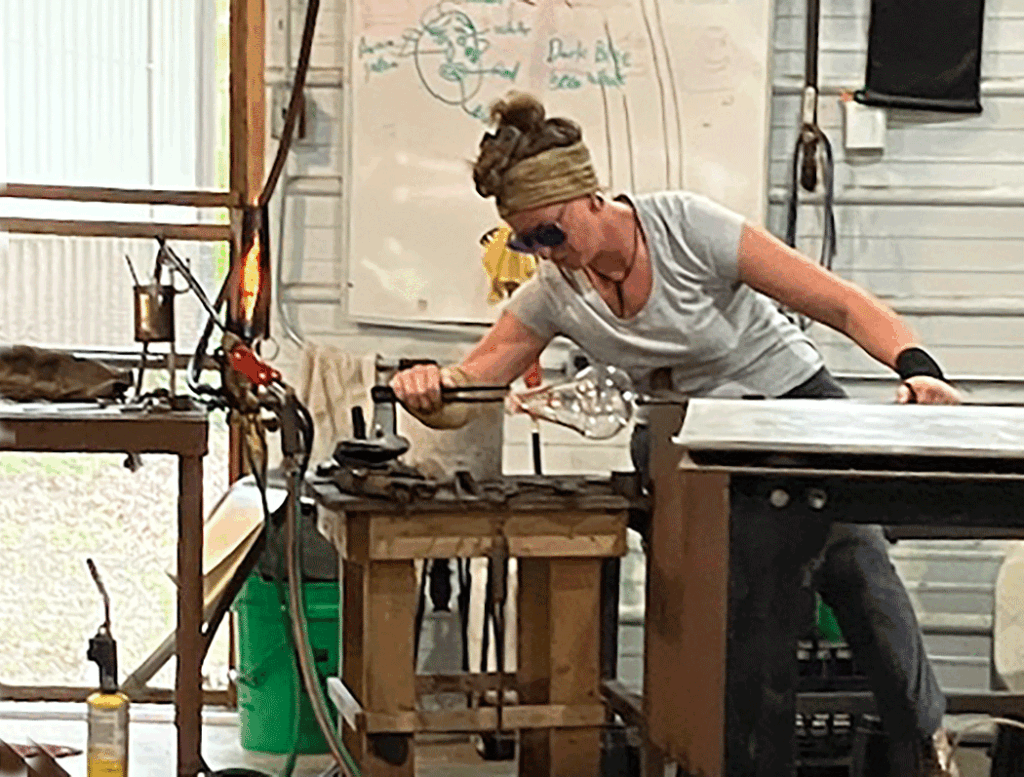
Glass artist Samantha Treankler has always been attracted to functional art—art that has a purpose beyond its pleasing surface. Having just finished an apprenticeship with accomplished glass artist Tim Blair of Bloom and Bark Glass Blowing Studio in Keosauqua, Treankler presents her new work in a solo exhibition, Practice in Shape, opening at the Fairfield Art Association Gallery on June 5, from 6:00 to 8:30 p.m.
Treankler’s work tends to explore cups, bowls, and vases. “The shapes for these objects are endless, as is my aspiration to continue to explore this provoking art form,” she says, “I am so incredibly grateful for this formal platform to be able to showcase my work.”\
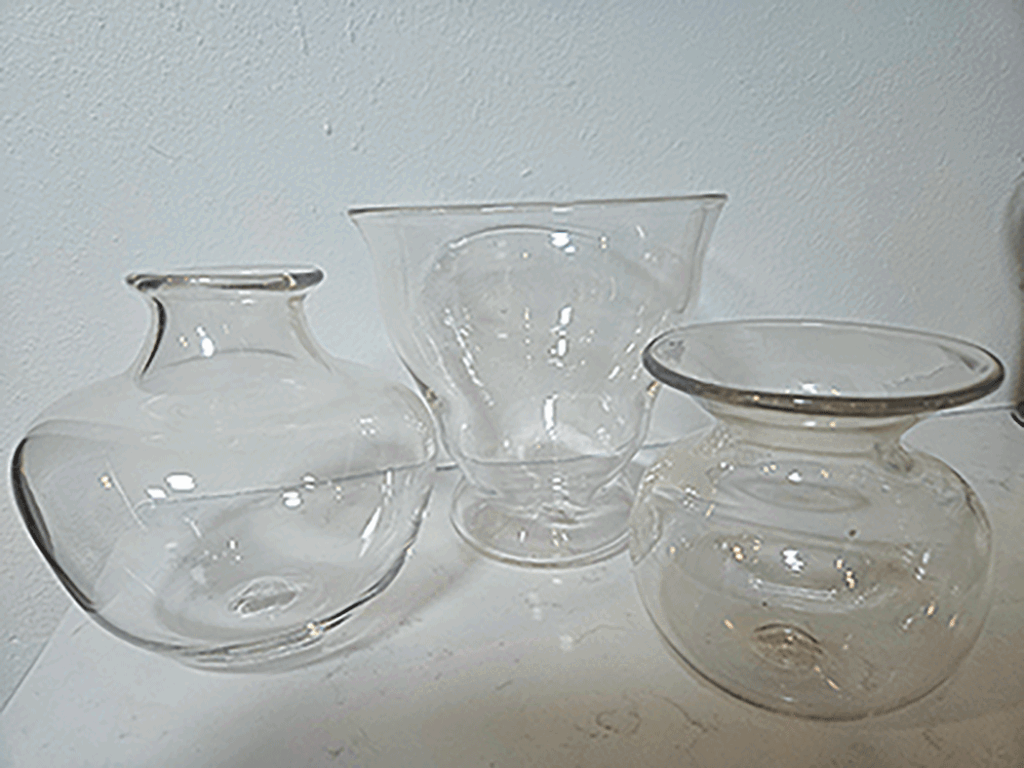
Humans have used glass blowing to shape glass since the 1st century BCE. Molten glass is inflated with a blowpipe, forming a glass bubble that can be shaped or molded into glassware for both practical and artistic purposes. Glass blowers have made everything from cups and bowls to light fixtures, ornaments, jewelry, garden decorations, sculptures, and telescope lenses.
“The heat of the hotshop has always been addictive,” Treankler says, explaining that glass becomes malleable at 2,000 degrees. “There’s a furnace that has a crucible of melted glass, and that furnace sits at 2,125 degrees Farenheit,” she says, adding that the blowpipe can be dipped into the molten glass like honey. “You twist as you pull it out to keep a glob on the end, blow into it to get some air, then reheat it in the glory hole and shape it to your will, or however it wants to be shaped. Sometimes I have an idea in my head and the glass is just doing something else. So I try not to fight it. The moments that I try to fight it, it usually breaks at some point in the process.”
The molten glass is rolled on a flat metal slab called a marver, which helps to control the shape and temperature of the glass. Color can be added by rolling the glass in crushed colored glass or pieces of pencil-thin colored rods of glass. Temperature regulation is very important—the glass must be kept hot enough to stay malleable—so it is moved back and forth between the marver and a reheating chamber called the glory hole. A glass blower has to simultaneously blow into the blowpipe while rotating the pipe to keep the expansion of the glass even. If a wall of the bubble ends up thinner than the rest, it will cool faster and potentially break.
Once the glass has reached its final shape, it is deposited in an annealing oven, which slowly brings the temperature of the glass down. Gradual, even cooling helps protect the glass from shattering, and a typical glass piece will take about 12 hours to cool.
Glass blowing involves a lot of heat management. “The piece has to be hot enough,” Treankler says. “If it cools off too quickly, it will crack, and if you get it too hot, a bubble can just collapse on itself.”
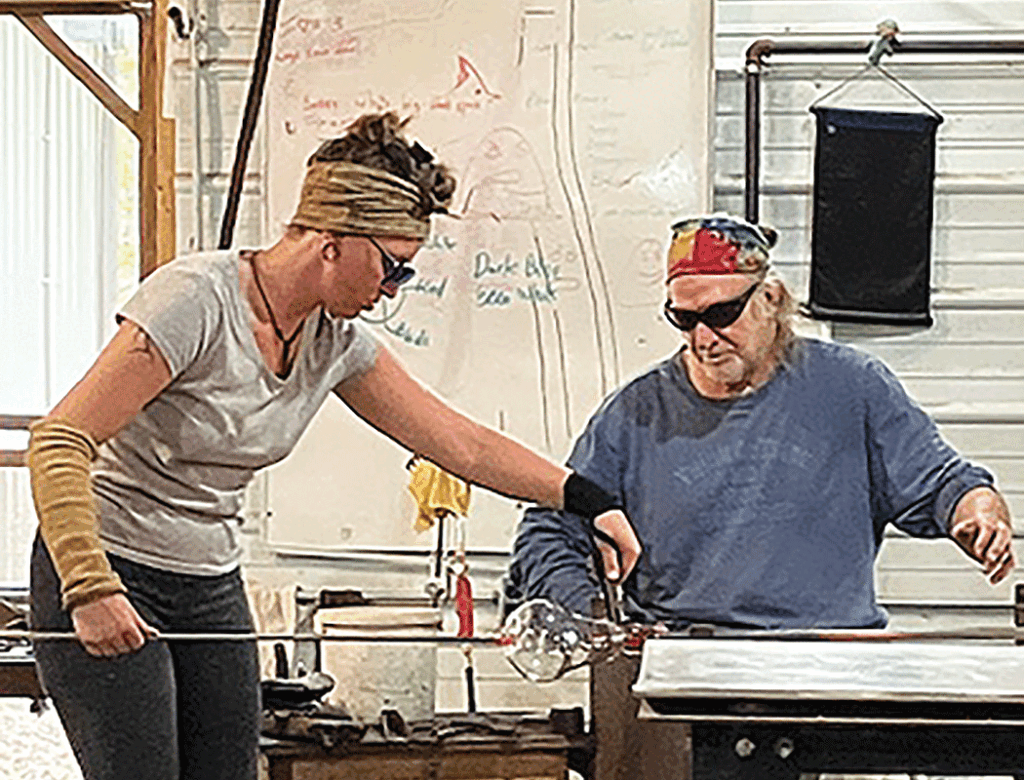
Glass blowing is very much a team effort, and Tim Blair and Treankler have an obvious, easy-going camaraderie as they assist and support each other through the creation process. It was Blair who first brought up the idea of an apprenticeship, and they applied for an Iowa Traditional Arts Apprenticeship Grant, administered by the Iowa Arts Council, to support it.
Treankler’s apprenticeship with Blair involved 100 hours over the course of a year, culminating in Practice in Shape, her “chance to share what I’ve learned from these beautiful opportunities and mentors.” She explains that the title of the exhibition stems from her perfectionist tendencies. “Juggling this desire and the nature of the glass has pushed me to adjust and accept the final pieces created. I’ve had to learn that sometimes glass doesn’t move the way I intend. Adapting on the spot to the molten glass has been a wonderful lesson.”
Over the course of the year, Treankler has been practicing a lot of different shapes, letting repetition help her perfect her practice. She says that coming up with new shapes can be the hard part—it can be easy to get stuck trying to make the perfect cup. She feels this apprenticeship “has pushed me outside the comfort zone, to try new things.”
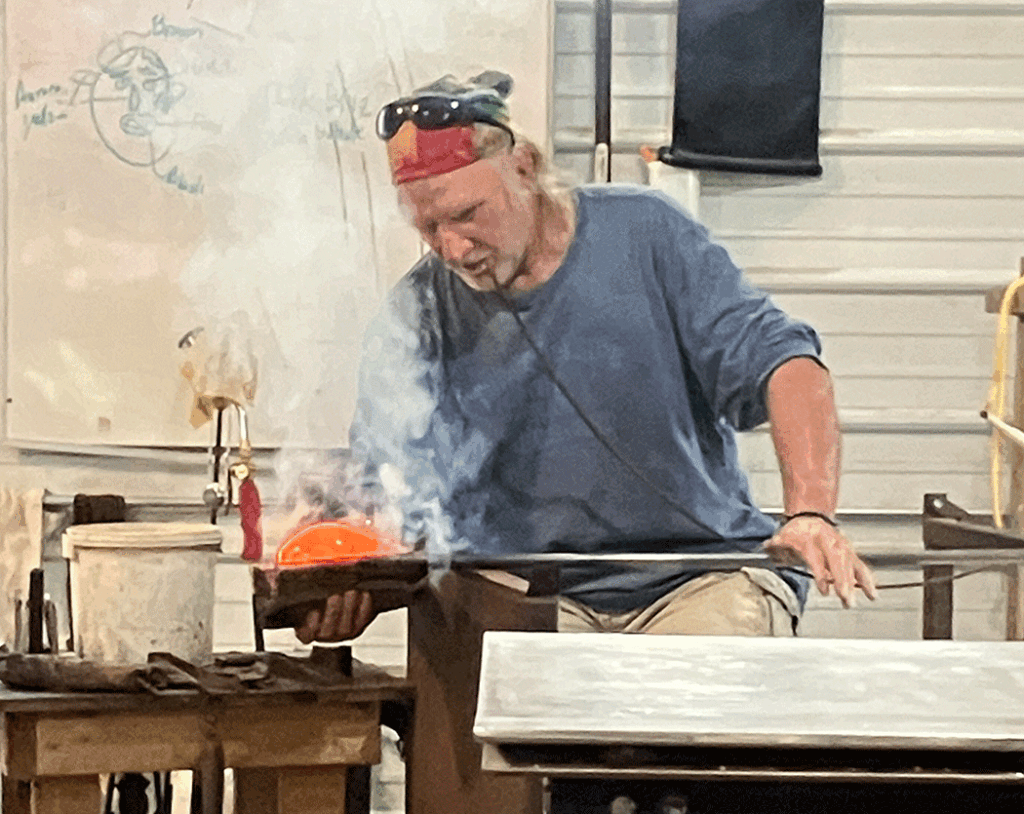
Blair and his wife, Kim, own Bloom and Bark, located on a picturesque farm nestled in the rolling hills of Keosauqua, near the Des Moines River. Home to the Local Artisan Market and a popular destination for arts and crafts experiences, Bloom and Bark offers a number of glass-blowing classes, workshops, and demonstrations. Primarily self-taught, Blair got into glass blowing about 12 years ago, when he took three classes from Jim Topic, a glass blower from Nauvoo, Illinois. He loved it so much that he converted an outbuilding in a professional indoor glass studio and later added an open air studio that he used during the summer months.
For Treankler, the apprenticeship has been transformational. “This year has been an immersive experience with this medium. I’ve learned how to make objects in my mind come to life.”
For more information about Bloom and Bark’s glass blowing classes and Artisan Market, visit BloomandBark.com.