
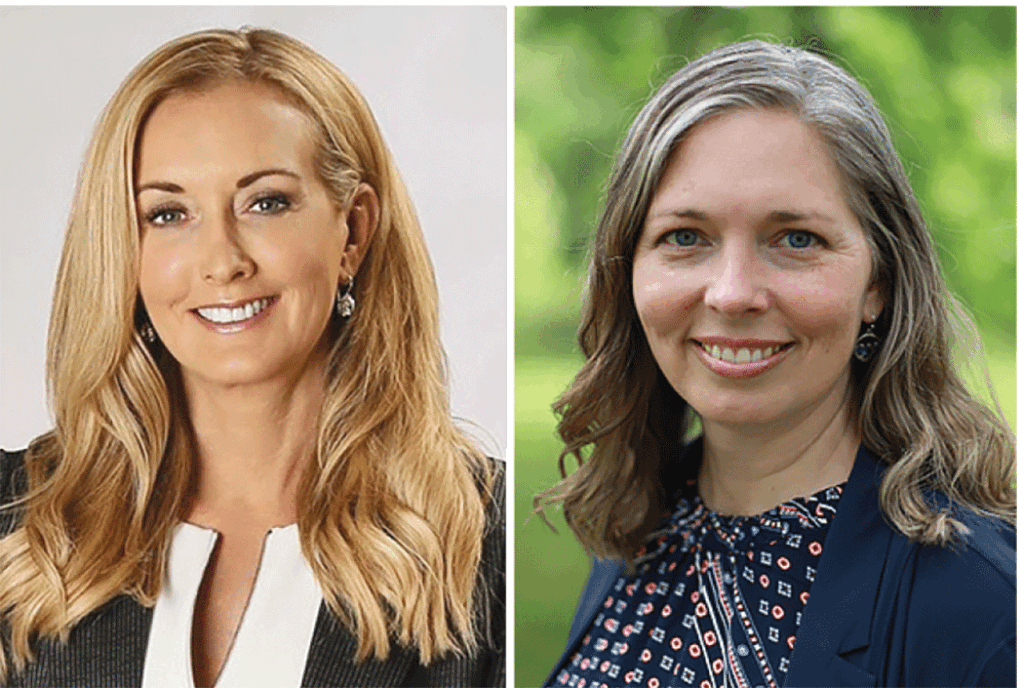
How is it that businesses wind up with so much power over our regulatory system? How does that affect the rest of us? Investigative journalist Carey Gillam and Iowa Environmental Council’s Colleen Fowle will examine the impacts of this influence on pesticide regulations and Iowa’s water quality at the upcoming annual meeting of JFAN, “Cancer, CAFOs and Corporations: How Regulatory Corruption Affects All of Us.” The meeting will be held Thursday, October 8, at 7:00 p.m. via Zoom.
Internationally renowned author and investigative journalist Carey Gillam has decades of experience reporting on the influence pesticide companies have exercised over agencies like the EPA. She’s penned two books, Whitewash and The Monsanto Papers, to document the deception that Monsanto used to shield itself from liability surrounding glypho-sate use.
Gillam will talk about how agribusinesses have hijacked the science and regulatory agencies, the rampant corruption that has affected the regulatory process, and how that ultimately affects public health, including the link to Iowa’s high cancer rates.
In a state influenced by a multibillion-dollar, multinational agricultural industry, Iowa struggles to protect its water. Col-leen Fowle, Water Program Director at the Iowa Environmental Council (IEC), will address how the state is failing to safeguard this precious resource in mean-ingful ways, how agriculture and cancer are connected, the state of IIHR water sensor funding, and why a program that protects people has become a political football.
It’s been 12 years since the Nutrient Reduction Strategy was implemented to reduce nitrate pollution and more than 10 years since an analysis of the Iowa Women’s Health Study found associa-tions with cancer and high nitrate levels in drinking water. So why does the pollution crisis continue? Join JFAN on October 8 to find out how regulatory capture impacts us all and what we can do to fight back against the regulatory corruption. A Q&A session will follow the meeting.
Register at JFAN.org.