
There is a long-held theater tradition of placing a freestanding, single-bulb lamp center stage before closing up shop for the night. The ritual may have originated pre-electricity as a means to avert gas-leak explosions by keeping a solitary lantern flame burning overnight, but practically speaking, a light prevents anyone entering in the dark—late-night custodians, union workers, hopeful burglars, and the like—from tripping on floor-fixtures or furniture, falling into the orchestra pit, or god forbid tumbling off the front of the stage.
Safety aside, the single bulb faithfully placed center stage is called a “ghost light” for a reason; there is an even longer held superstition among thespians that not just a few but every theater is haunted. And as lore has it, turning on the ghost light pacifies any resident shade with a penchant for drama by providing them the opportunity to bask in their own spotlight. The light might give ’em a chance, for instance, to float and flicker about as they rehearse a new (extremely) soft shoe number—or to tread the boards moaning, “Oh that this too too solid flesh would melt,” even though it already has. A gesture of sorts made by the still-living, or in some cases a desperate plea, the lamp says, “You do you, Boo! But pretty please don’t curse my production or sabotage my set! Prayer-hands emoji.”
Some theaters extend the gesture even further. The Palace Theatre in London, for example, keeps two seats in its balcony permanently bolted open for guests from another realm.
Even staff and students at the old McPherson Theater on the campus of Illinois Wesleyan University, my own alma mater, gave a wide berth for the ghost of Harry McPherson, whose shenanigans made us think twice about working alone in the prop shop after 10 p.m. Harry would turn lights on that you’d just turned off. He’d start and stop the washing machine in the costume department at random. He’d jiggle doorknobs and audibly stalk the hallways. And, as legend goes, he’d attend shows. In the back left corner of the house, seat J42 was often seen in the “occupied” position. Out of respect, the box office staff only sold tickets for that particular seat as a last resort.
Ope! I’ve veered off into the wrong state. This article is about Iowa.
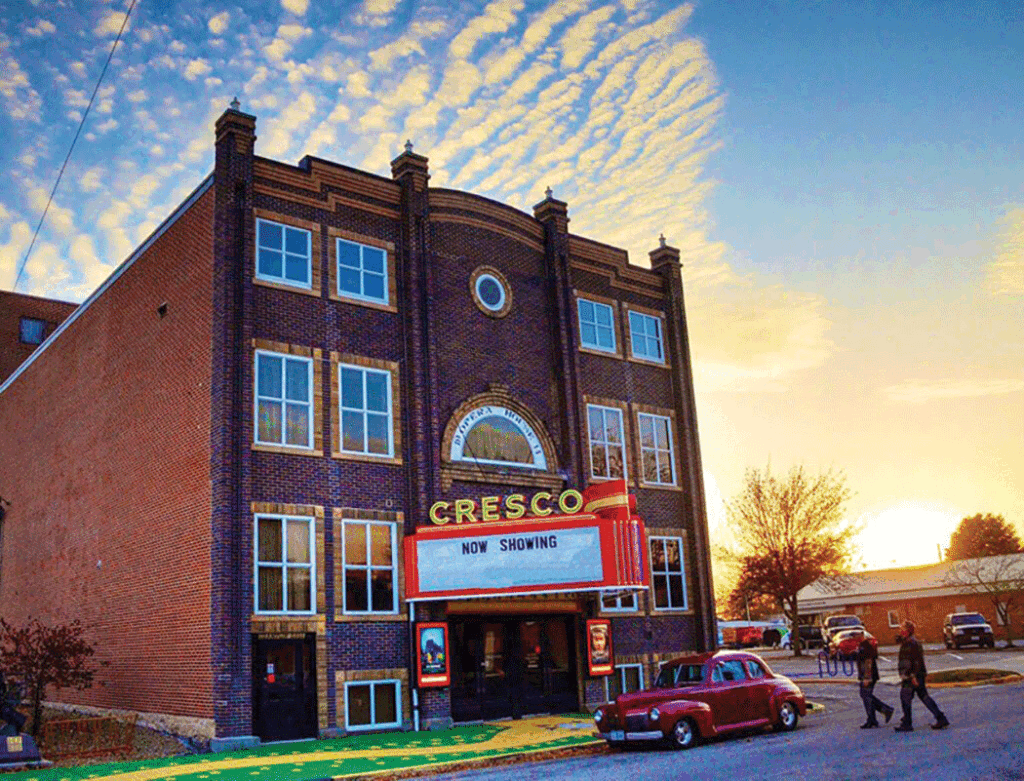
Cresco Theatre & Opera House, Cresco
The Cresco Theatre and Opera House up in Howard County makes an appearance on several “most-haunted” lists—not just for Iowa but spanning the Midwest. Established in 1915, the theater still plays host to live performances, film screenings, and several eerie entities. One legend tells of ghostly vaudeville performers reviving their acts onstage. Another speaks of an apparition who sits in the house when the lights are off but performs a disappearing act if anyone attempts to approach it. (Him. Her. Them?) According to IowaHauntedHouses.com, other entities have been reported in the Cresco Theatre basement, where unexplained electrical disturbances are known to occur, along with “odd sounds and voices that are heard when the place is empty.”
The Cresco Theatre and Opera House claims that paranormal investigations over the last few years have yielded “interesting results”—interesting enough that the place is available to rent, should you wish to bring in your very own team to do some ghost hunting! “A staff member will remain with your group at all times,” they state. Yes, but will the aforementioned staff member be willing to hold my hand? Or does that cost extra?
Strayer-Wood Theatre, Cedar Falls
Katrina Sandvik, one of costume designers at the University of Northern Iowa’s theater department and an alum of the program, shared a little about UNI’s theater ghost, nicknamed “Zelda.”
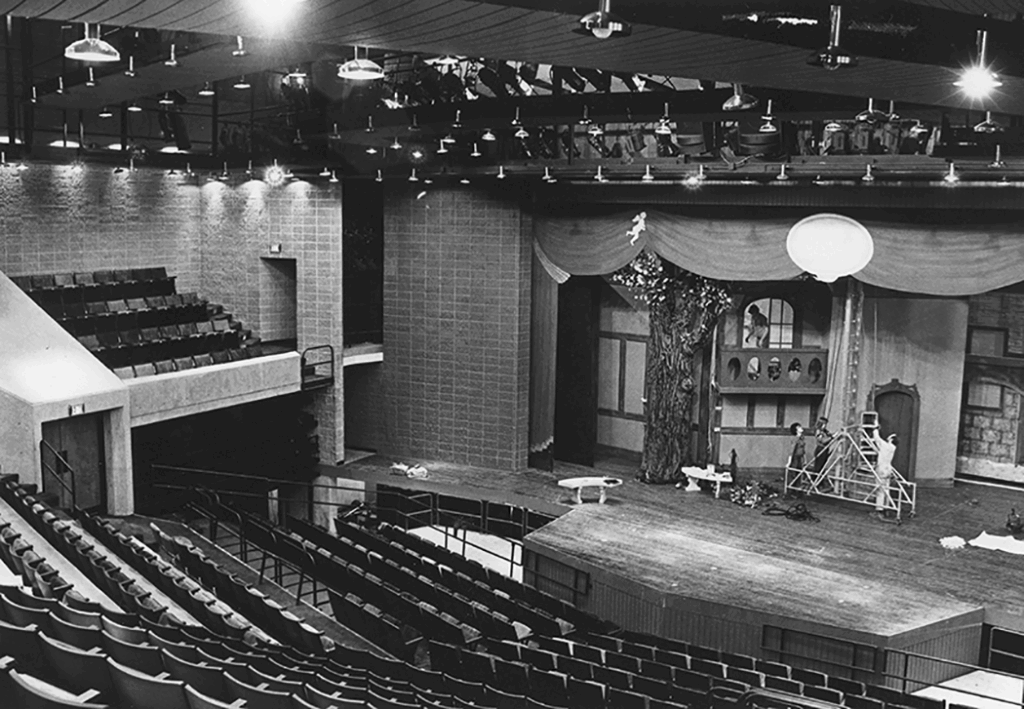
“Legend has it that Zelda used to live in the old auditorium in Lang Hall,” says Sandvik, “but when the Strayer-Wood was built [in 1978], she followed the theater students over to the new building.” Just as a stage actor is told “find your light!” when she accidentally wanders into the shadows, Zelda did just that.
“Zelda is benevolent for the most part and just roams the halls and opens and shuts doors,” says Sandvik. “If you are here late at night and you hear doors opening and closing in the distant parts of the building, that is Zelda making her rounds. Anything unexplained that has moved or disappeared or reappeared is usually a Zelda hijinks. We leave a light on for her so she doesn’t fall in the pit.” I told ya!
According to a 2015 Northern Iowan article by Kayleen Turning, titled “Haunted Campus,” Zelda, who was observed on campus as early as 1963, is also known for appearing when all the lights are shut off, playing piano, and doing impressions of a crying baby.
Although she has been called a kindhearted ghost, Zelda does have an occasional slip—and has, at least once, been heard flinging insults. Perhaps something to the tune of, “Kindly get off my stage, you prop-grabbing scenery chewer”?
The late UNI Professor of Theater Jay Edelnant was quoted in Turning’s article. “Zelda was often seen late at night in the main hallway and staircase that passes in front of the auditorium while shows were rehearsing or during high-stress times, final exams, and dress rehearsals,” he said. “Sightings [at Strayer-Wood] were frequent during the first few years, especially during the early summer storm season…” I feel you, Zelda. I get pretty agitated during a storm too, but usually it’s because I’m worried my basement is flooding.
Despite the occasional name-calling, “Zelda has a helpful side, too,” wrote Turning. During a 1978 performance to a sold-out audience, “an overhead electrical cable became unhooked, and Zelda was thought to have guided the cable to fall on the only open seat in the theatre.” Good girl! We may get catty from time to time, but I’ve always maintained that theater people are the best kind of people.
UNI’s Alpha Psi Omega chapter—an honor fraternity and service organization for upper division theater students—still gives “Zelda Awards” to students who have had “strange experiences” while putting up a play.
Whether or not her experience was worthy of a Zelda Award, I can’t be certain, but former student Katherine Marie shared a vivid 2009 encounter on Instagram. “I was the last one in the theater and was walking to one of the basement stairwells when I heard a piano playing. I went to tell whoever was playing the piano I was locking up, but when I turned the corner, it [stopped] and no one was there. The only two ways out were by me or a heavy loud door at the other end of the green room. No one. So it had to be Zelda.”
Rumored to be either a former teacher who died in class or on stage, or a youth whose wishes to attend the school were never fulfilled, Zelda and her origin story remain a mystery. She is one of three ghosts currently haunting the UNI campus. Zelda, Travis, and Augie, may your souls find peace one day very soon.
The Grand Opera House, Dubuque
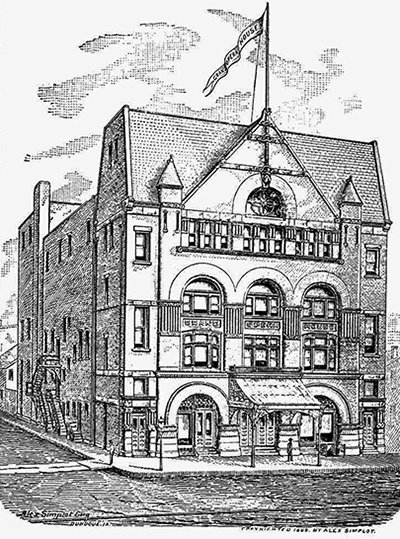
The handsome Grand Opera House, which was completed in 1890 and is now listed on the National Register of Historic Buildings, is also among Iowa’s haunted relics. Details were hard to come by—perhaps current staff want to keep the ghost stuff under wraps—but according to IowaHauntedHouses.com, at the Opera House: “lights go on and off by themselves,” pretty standard fare I suppose; “tape recorders and cameras act strangely,” good luck getting footage of your favorite acts; “apparitions have been seen,” now we’re getting somewhere; and “ghostly singing has also been heard from an empty stage.” Oooooooh, aren’t you dying to know which song?
“The ghost seems to love the theater,” claims the online master site of haunted Iowa, “and those who work here seem to be ok with the spirit since it doesn’t do anything frightening.” Ummmm. Is it just me, or doesn’t mysterious singing emanating off an empty stage qualify as frightening?
One might imagine an anguished aria from Wagner’s Flying Dutchman, the ghostly sea captain cursed to sail the stormy oceans (or in this case the Mississippi) for all eternity. Nope, sorry, that opera was never performed here.
But … a different tortured soul, also desperate for love, has made a shadowy appearance in this very theater. I can’t help it. The chilling remnants of my ninth-grade romantic obsession are thrillingly filling the catacombs of my mind (forget Paris, remember Dubuque!):
Sing once again with me, our strange duet. My power over you grows stronger yet …
He’s here. The Phantom of the Opera.
👻 👻 👻
Other Iowa theaters claim unexplained cigar smoke in the air, lighting and sound components that work all by themselves, and even electric cords that wind up on their own. Yes, it would seem even the “tech” spectres and backstage wraiths still long to keep the magic going.
Although creating live theater has its ways of driving you mad, the cruel truth is once you’re bit by the bug it’s hard to quit the drug—regardless of whether you’re living or dead, it would seem.
I wonder which role might call me back from the other side? Or which theater’s low, ghostly glow I will be drawn to at midnight. What can I say, I have always looked best in dim lighting.
My haunted soul will forever be grateful to the opera houses and auditoriums that keep the “spirit” of theater alive.
Mwa-ha-ha-ha-ha-haaaaaaaa!
Do you have an Iowa theater-related ghost story to tell? Email it to us at sourceoffice@lisco.com. We’d be happy to add it to this article online. Happy Halloween!
