
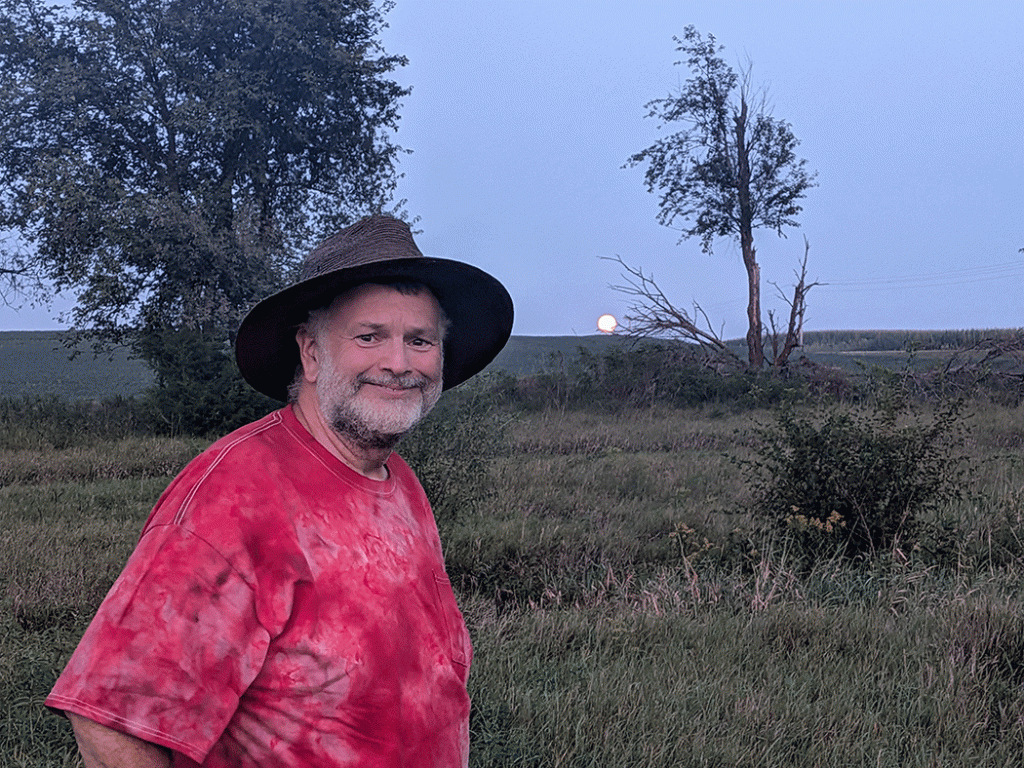
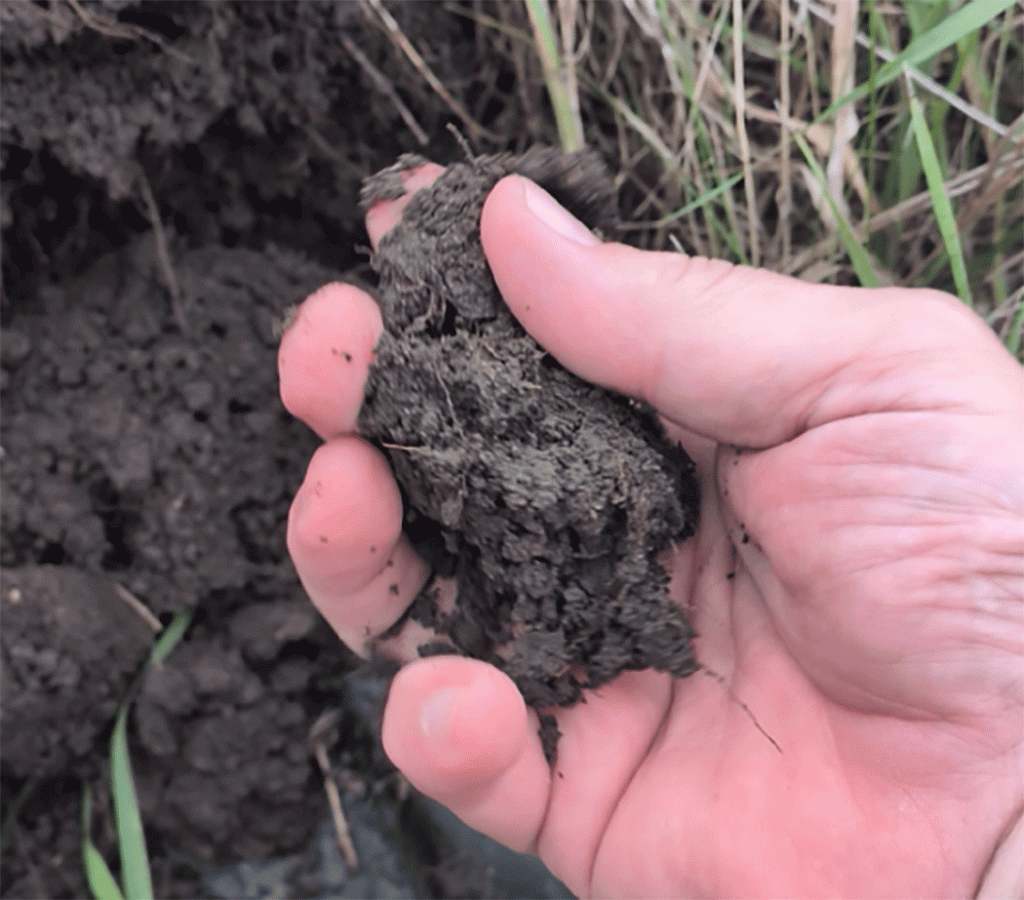
Last month, my wife Mandy and I were out at the homestead in Jefferson County digging soil samples. The shovel came up black, almost too dark for the phone camera to catch right, and when I broke a clump apart in my hand, the little aggregates stayed stuck around the roots. It had rained not long before, yet the soil still crumbled instead of smearing. I kept turning pieces over, marveling at the fine roots threading through them, and thought about how different it looked from the ground we walked on when we first bought the place.
In 2015, the topsoil measured about an inch. You could scrape it aside and hit lighter, harder material almost immediately. The land had been farmed conventionally for a long stretch, and most of the organic matter that had once been there was gone. We weren’t looking to become typical crop farmers. When people ask what we grow, I usually say soil. That answer still feels more accurate than naming particular plants or animals.
Building soil depth took a mix of things done over years rather than one big intervention. We kept the surface covered as much as possible: mulch, residue from whatever was growing, sometimes thicker layers of leaves or wood chips in certain areas. Compost went on regularly, both the stuff we made and material we brought in when we could. Cover crops filled gaps between other plantings, so roots stayed in the ground longer.
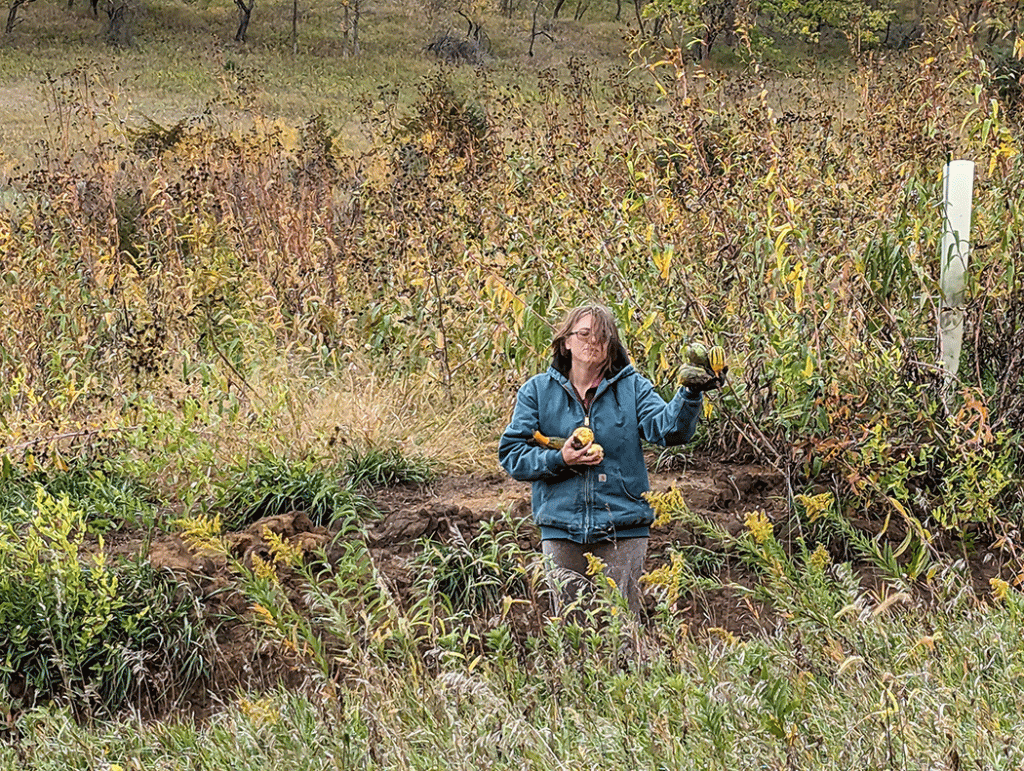
We also worked to bring natural wildlife back onto the property. Birds, insects, and small mammals that had been scarce started showing up again once the ground stayed covered and the plant diversity increased. They scattered seeds, worked the surface layer, and cycled nutrients through their own systems, adding another layer of biological movement without us managing livestock rotations.
We avoided turning the soil whenever we could. The goal was to stop losing what little organic matter remained and then start adding it back faster than it left.
The difference shows up in how the ground behaves, not just in how deep you can dig before the color changes. Water soaks in instead of sitting on the surface or running off. After a hard rain, the surface doesn’t seal the way it used to. In dry stretches, the plants keep going longer before they stress. When I dig, the soil holds together in those small aggregates instead of falling into fine dust or dense clods. Roots explore farther. All of that points to more biology at work: bacteria, fungi, and the larger organisms that follow them, cycling nutrients and gluing particles together. We don’t run formal lab tests every year, but the field signs line up with what regenerative literature describes when organic matter climbs and disturbance drops.
I still compare notes with a nearby conventional field when I get the chance. Their soil comes up lighter, tighter, with fewer visible roots in the upper layer and less of that crumb structure. It isn’t a scientific trial with matched plots and controls, just two pieces of ground under different management for a decade-plus. The gap is obvious enough that visitors notice it before I point anything out. Depth alone doesn’t guarantee productivity, and 15 inches won’t solve every problem a season can throw at us. Still, the change has shifted what feels possible on the land. We spend less time fighting compaction or chasing moisture. More of the rainfall stays where it falls. The plants we do grow seem to need fewer outside inputs to stay reasonably healthy.
None of this happened on a fixed schedule or with perfect consistency. Some years, we planted the cover crops late. Compost piles didn’t always heat the way they should. Wildlife returned gradually and unevenly. The point was direction more than precision: keep adding carbon, keep roots growing, keep the surface protected, and disturb the structure as little as possible.
Over 11 years, that added up. The inch we started with is now closer to a foot and a quarter in the spots we check. I don’t expect the rate to stay that high forever. At some point the system reaches a new balance and gains more slowly. For now, the trajectory still feels useful, both for what we can grow and for the simple fact that the ground holds more water and supports more life than it did when we arrived.
People sometimes treat regenerative practices as a set of techniques you apply to get a certain result. Here, it has felt more like adjusting how we move through the year so the soil’s own processes can do more of the work. The aggregates I held in my hand last month are one small piece of evidence that those processes are running. They form where roots and microbes interact over time. Seeing them, and knowing the ground underneath can take and hold rain without turning to mud, is what still interests me most about the project. The rest, whatever we harvest above ground, depends on that layer staying intact and active.
That’s the work, at least as I understand it so far.
David N. Ford is a Ph.D student in Plant and Soil Sciences. Follow his writing at IowaSoilGuy.substack.com.