
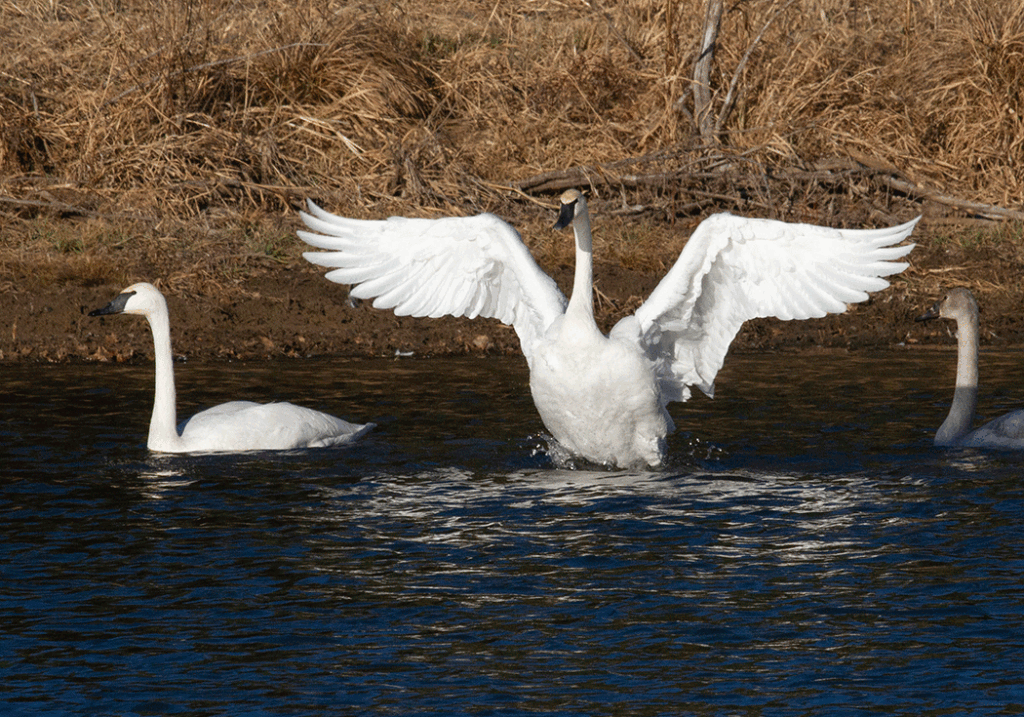
In March of 2000, I stood at the edge of Lake Sugema, in Southeast Iowa, and watched a small flock of trumpeter swans swim toward the far shore to begin their new life.
Conservation officers of the Iowa Department of Natural Resources had just unlatched the doors to the swans’ individual cages. Over 100 exhilarated well-wishers stood back to give the birds some space.
The first swan stepped out of its cage and looked around as if not sure what the situation was. The next bird had its wings spread by the time it cleared the door. It started running, head forward, beating its wings in a power dash to the water. The other birds rushed behind it. All skidded and splashed into the lake.
In a moment, they were utterly composed. As a body they glided away and left the watchers behind.
They were home.
Reintroducing the Trumpeter
Their release was part of a long effort to bring the trumpeter swan back to Iowa. This is a big, majestic creature—the heaviest native bird in North America, an emblem of wildness and freedom.
What Happened to the Trumpeters
Trumpeter swans were once abundant throughout the Upper Midwest, New England, and the Pacific Northwest. Prior to 1800, explorers and fur traders described them nesting on prairie lakes and slow-moving rivers. In Iowa, millions of acres of shallow wetlands made the landscape prime trumpeter habitat year-round.
By 1883 the great birds were gone. They died from unregulated hunting. The birds ingested lead shot while feeding, which poisoned them. The draining of wetlands for agriculture destroyed their habitat.
Trumpeter swans no longer bred or lived in Iowa. A few wandered through from time to time, but they did not stay.
Across nearly all of North America, the species seemed headed for extinction. By 1933, only about 70 Trumpeter Swans were known to survive in the United States, confined to the Yellowstone National Park ecosystem.
Trumpeters in Alaska
Nature gave us a break. In 1952, the U.S. Fish and Wildlife Service discovered a previously unknown population in remote Alaska. This refugial stronghold saved the species and made reintroductions possible across parts of its former range.
Iowa began its own reintroduction effort in the 1990s. Between 1995 and 2021, about 1,200 swans were released statewide. Lake Sugema was one of several ideal sites for nesting: a large, shallow lake with standing dead trees and abundant woody debris.
Success, So Far
Today at least 135 pairs of trumpeter swans nest in Iowa, and the number continues to grow naturally. That doesn’t mean they’re as common as chickadees, but they are no longer rare.
Trumpeters now appear on lakes and rivers throughout the state, sometimes even on farm ponds. From the highway, motorists may glimpse immense white birds, improbably serene.
Keeping Them Here
Reintroduction alone is not enough. Trumpeter swans survive only if the conditions that destroyed them are not allowed to return. Iowa has changed those conditions—and now manages them, so that the birds don’t get wiped out all over again:
- Throughout the U.S., trumpeter swans are protected under the Migratory Bird Treaty Act. They may not be hunted, harassed, or captured.
- Lead shot has been banned nationally for waterfowl hunting, eliminating a major source of poisoning.
- The Iowa DNR manages public wetlands and works with private landowners to preserve large, shallow wetlands, especially important in winter. Refuges such as Union Slough National Wildlife Refuge and managed wetlands like Cone Marsh provide critical habitat.
Public understanding has grown. Trumpeter swans are native and protected, and they rarely damage crops. They feed almost entirely on native aquatic plants, pulling roots and tubers from shallow water. They do not forage in corn or soybean fields.
Enjoying Trumpeter Swans
Because of their great size, swans are visible from a long distance. Occasionally I’ve seen them flying high over my land in Jefferson County, even in the depth of winter. Usually it’s their calls that attract my attention. Their voices are brassy, like a band of trumpets, French horns, bugles, and maybe a kazoo. There’s an exuberance to the sound. I feel it in my core.
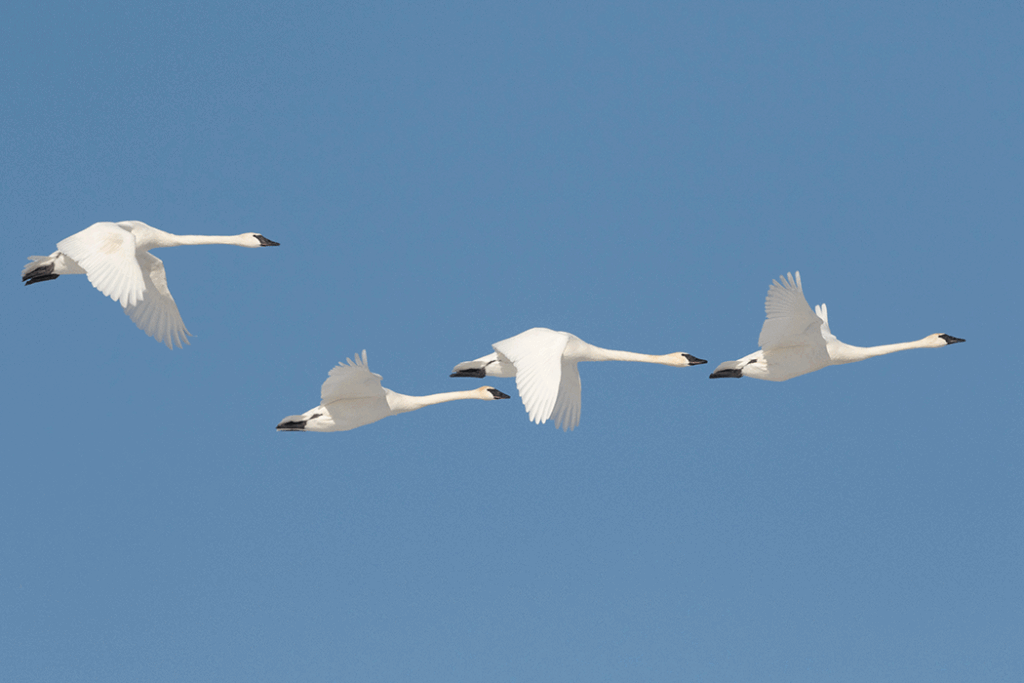
Twenty years after the introduction, I watched great white birds rise from the edge of half-frozen Lake Sugema. They flew in a great circle halfway around me, white against a lucid dream of blue.
It thrilled me to see and hear them up there, bugling in the icy air.
As loud as I could, I honked back at them, using my voice.
Find more articles by Diane Porter on “My Gaia” on Substack.