
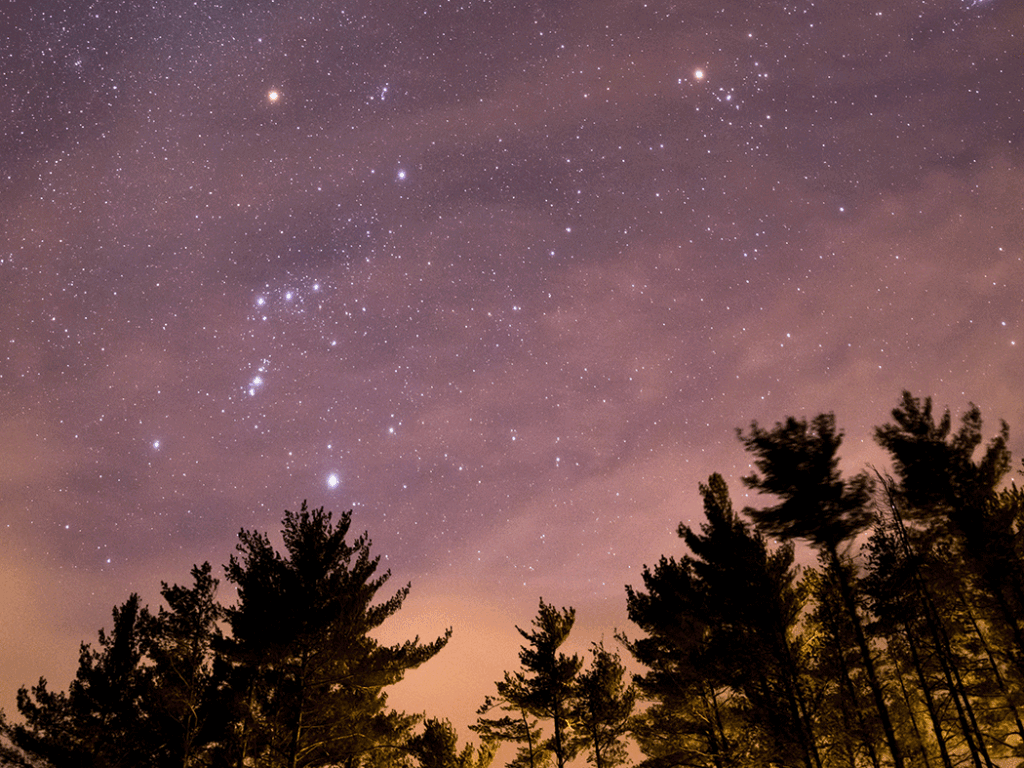
KCUR FM radio in Kansas City, Missouri—my home town—is inviting us to be citizen scientists by using our phone cameras to measure the brightness of the night sky and the level of light pollution here in Iowa and the Midwest.
In a February 2 podcast about the Globe at Night project, KCUR posted: “Astronomers need your help! And you don’t have to be an expert, because it’s as easy as stepping outside your home and taking a good look at a constellation like Orion.” Globe at Night (GlobeAtNight.org), the international campaign to raise awareness for our “right to starlight,” is asking for citizen scientists living in the Midwest to help determine the extent of light pollution in their states. Thousands of measurements have been contributed so far, but there is not enough data for Iowa, Missouri, Kansas, and Nebraska.
According to Globe at Night founder and NOIRLab astronomer Connie Walker, “Our 300,000 ground-based observations had a very startling result . . . our light pollution is increasing by 10 percent every year worldwide. And that’s a huge number.”
Walker says that before tapping into the pool of citizen observers, they relied on satellites to track light pollution. “We get a better sense of what is happening in terms of LED light from taking visual measurements here on the ground,” she says. “And that’s why these measurements from citizen scientists are so important. If more and more people help by reporting to Globe at Night, the data will get better and better.”
The white LEDS everywhere—from city lights to headlights—look bright white to us, but they’re actually emitting the blue spectrum, which mimics daylight. This increasing light pollution wastes electricity, prevents pollinators from finding mates, and kills thousands of migrating birds that mistakenly fly into brightly lit buildings. The good news is that we can keep our night lights and make them nature friendly simply by installing shielded, downward-shining fixtures with bulbs free of blue light in our homes, schools, farms, and workplaces.
Rate Your Night Sky
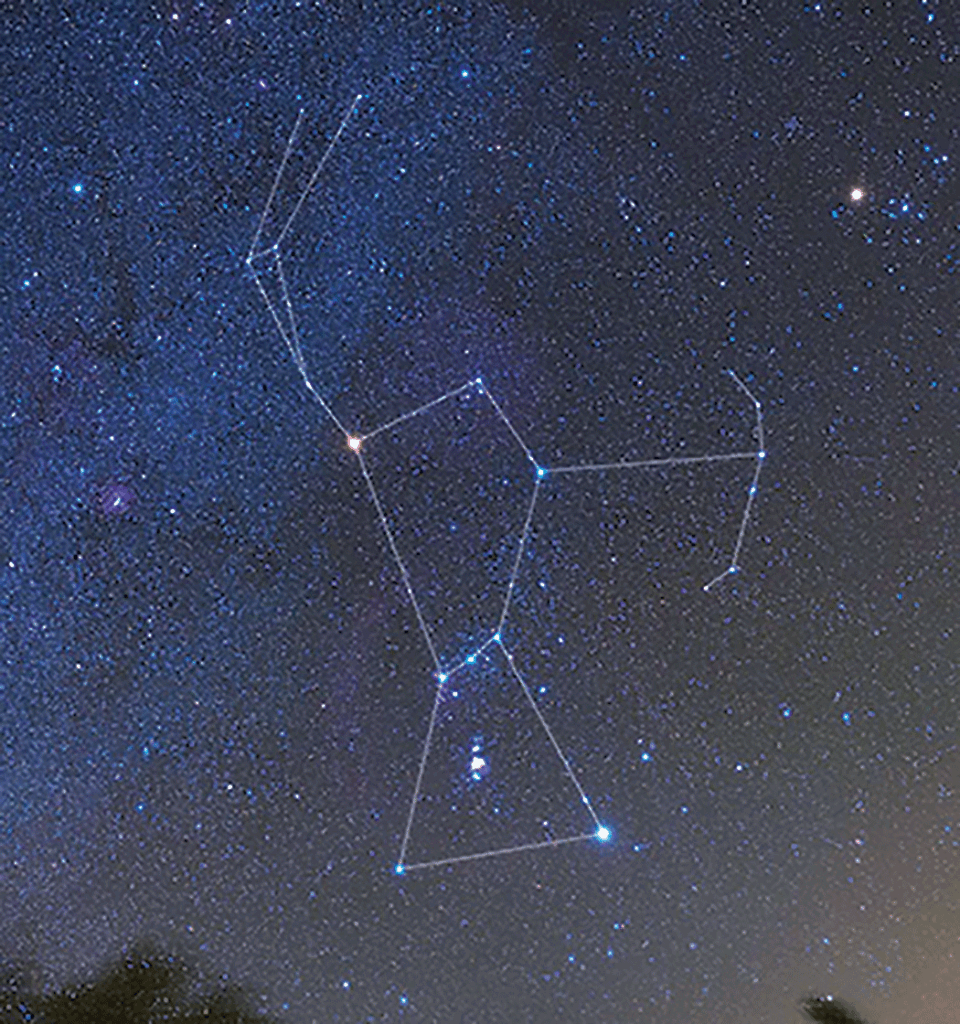
Rating your night sky is simple. Go out on a moonless night (in March, it will be around March 11), look up, and find Orion. Put your phone in night mode. Take a photo of Orion and use it to find the light pollution level in your local sky. Globe at Night helps you rate your sky with a tool that astronomers call the Brightness Scale. “A rating of one is a super bright city, very few stars,” Walker explains. “Two gets a bit starrier. Five is where you start seeing the Milky Way itself. And seven is the awesome view of the whole starry night sky.”
The Brightness Scale measures the brightness of the stars, not just the light in your sky, so it gives a precise reading of the night-dimming effect of your local lighting.
Here are the steps to take the photos and send the results to Globe at Night.
- Around 9 p.m. on a moonless night, step outside with your smart phone set on night mode and find Orion. For Iowans, it will be in the southwestern sky.
- When you get a picture you are happy with, go to the Globe at Night website to send them your results. Compare their images to your photo. Then fill in the rating number and tap submit.
Congratulations! You are now a citizen scientist!
For more information, visit GlobeAtNight.org. Find their menu of interesting activities under Resources.