
Q: What do the Chicago White Sox clubhouse and the New York City mayor’s mansion have in common?
A: They both recently installed bidets.
Picture this: A teenage time traveler from the year 2046 looks at you with disbelief. “Wait … you’re telling me people use toilet paper in 2026? And that’s it?”
You try to explain. You mention habits and traditions. You say it’s been considered normal for so long that people rarely give it a second thought.
The teen from the future listens politely, the same way we listen when someone explains dial-up internet or rewinding VHS tapes. Then they laugh. Not cruelly. Just the way people laugh when something old suddenly feels so very removed from current standards and conveniences.
The Trouble with TP
Toilet paper is one of the most ordinary necessities in modern life. It’s so familiar that it’s practically invisible. And yet, when you pause and look at the numbers, the system behind it definitely deserves some attention, especially with rising environmental concerns.
The average American adult uses roughly one roll of toilet paper per week, or about 50 rolls per year. A household of four uses more than 200 rolls annually, costing roughly $160 a year—and that’s when purchased in bulk.
And that’s just the consumer side.
TP requires trees (forests, really), large manufacturing facilities, energy, water, labor, transportation, packaging (often plastic), storage, and constant restocking in stores, offices, and homes. Entire supply chains exist to support a method of hygiene that persists largely because it’s familiar, not because it’s efficient.
Bidets: 75% Usage Elsewhere
And here’s the part that tends to surprise people. Most of the world has already moved on from using TP. Across much of Europe, Japan, the Middle East, Asia, and many developing nations, water-based hygiene has been standard for generations. Bidets aren’t novelties there. They’re normal. They’ve evolved quietly over centuries, improving in design the same way other everyday tools always do.
In the United States, bidets are still commonly misunderstood as luxuries or curiosities. It’s not an unreasonable reaction when you recognize that every significant innovation follows the same arc towards acceptance: initial skepticism, jokes, resistance, then quiet adoption. Think washing machines, dishwashers, seatbelts, remote controls, and smartphones.
Bidets are on that same trajectory of acceptance, because the practical benefits of bidets are straightforward:
- Superior cleanliness
- Gentle, non-abrasive, non-irritating care
- Increased independence and comfort for elderly users
- Reduced exposure to chemicals commonly used in TP production, including PFAS and bleaching residues
- Lower environmental impact through reduced resource use and waste
Costs Are Modest
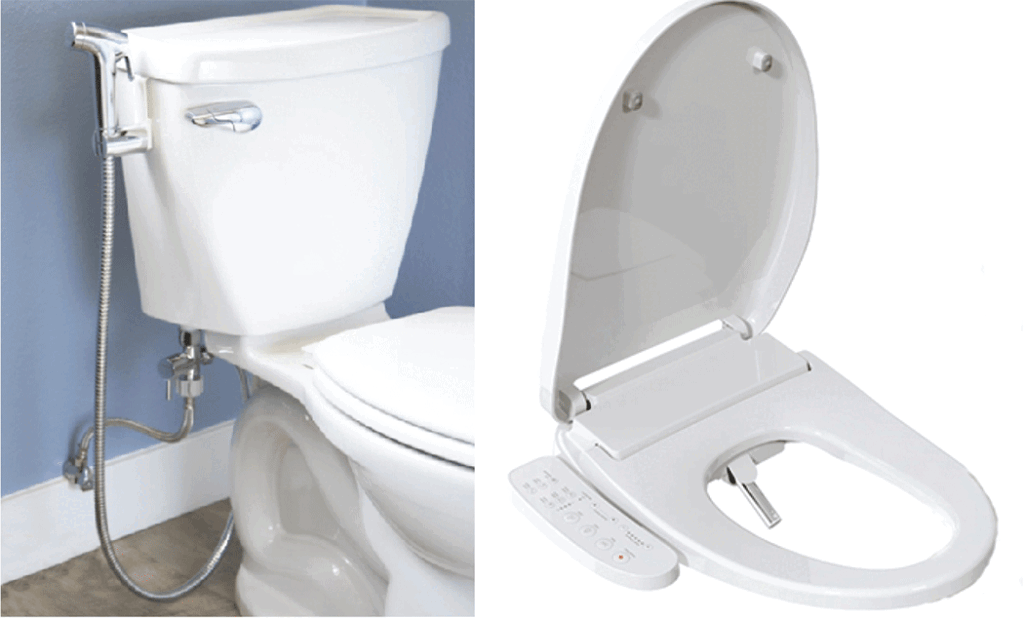
Modern bidets are simple. Immediately after using the toilet, one uses a bidet to spray water and provide a really clean clean. Basic bidets are a simple hose, connected to, but independent from, the toilet’s existing clean water source. Similar to a kitchen sink sprayer, they offer manual control. From the basic model there is a progression of add-on features, like heated seats, heated water, and warm air fans for drying. (In Japan, some of the bidets actually play a little melody while in use.)
Bidet costs range from $40–$60 for basic, non-electric attachments to over $2,000 for high-end smart toilets, with most popular electric bidet seats costing between $150 and $700.
Most bidets use less than two cups of water per session. Many install in under 30 minutes. Basic hose models require no electricity. Advanced options may require electricity. None of them requires complicated plumbing.
In other words, the barriers to entry are minimal.
Progress rarely arrives with drama. More often, it shows up quietly, makes life easier, and eventually becomes the new normal.
Twenty years from now, people will look back and wonder why the change took so long.
Consider installing a bidet. It’s not radical. Not strange. Not uncomfortable. Just better for people and the environment.
This article was developed with assistance from Jeremiah DeBoer, who is knowledgeable about modern bidet systems and available to answer questions or assist with installation at (320) 237-1175.