
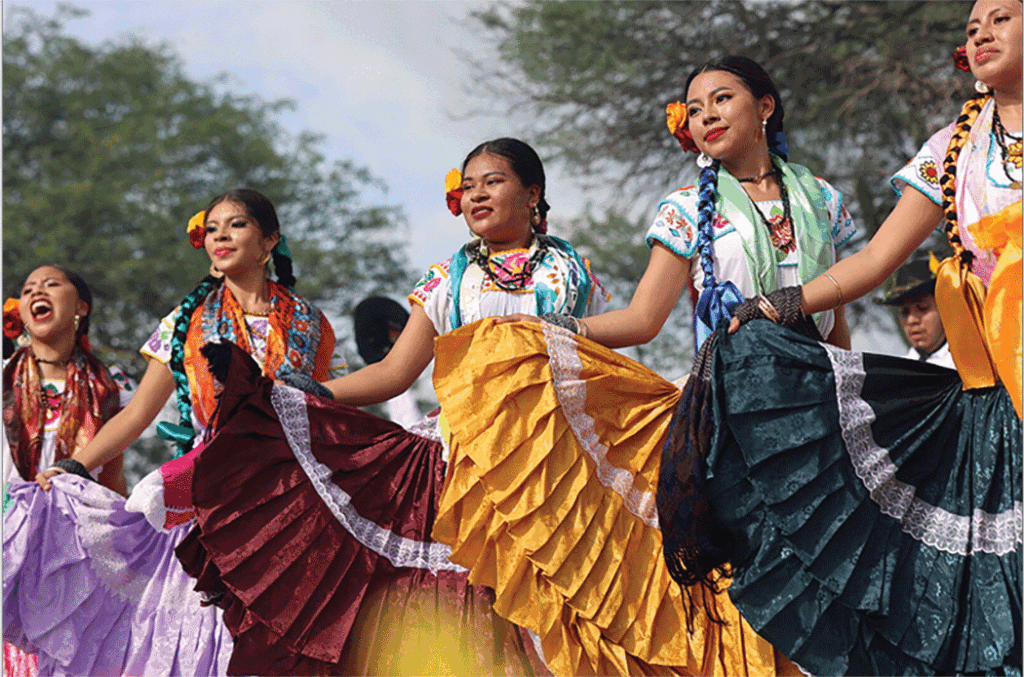
Who gets to decide what a nation grows, eats, and protects? This is the question that first drew us to making Seeds of Sovereignty, a documentary that looks into Mexico’s struggle with the United States to protect its biodiversity and grow its native foods. At the center of the conflict is U.S. pressure on Mexico to adopt GMO corn and industrial farming practices, posing a serious threat to the country’s traditional agriculture and environmental health. Now screening in more than 35 countries and selected by over 70 film festivals, Seeds of Sovereignty will be shown in Fairfield on June 6 and 7 at the Fairfield Arts and Convention Center.
Why We Made This Film
I live in Iowa, a state dominated by industrial agriculture. I became increasingly troubled by the question of whether this model of agriculture is really serving the people who live alongside it, or whether it primarily serves large corporations that rarely carry the human and environmental costs of the system they profit from.
At the same time, I began following the escalating pressure on Mexico from the United States to not only accept genetically modified corn into its food chain, but also to align its farming system with a broader industrial agricultural model built on chemical dependency. Mexico resisted, arguing that native maize, biodiversity, and food sovereignty were too important to sacrifice.
That was the beginning of Seeds of Sovereignty.
Maize: More Than a Commodity
When we first began filming in Oaxaca, what struck us immediately was how differently food and farming were understood there. Maize was not treated as a commodity—it was alive in the culture. In markets, restaurants, homes, and farms, we encountered extraordinary diversity—red corn, blue corn, yellow corn, black corn, varieties cultivated and protected over generations. The connection between food, identity, and land was visible everywhere.
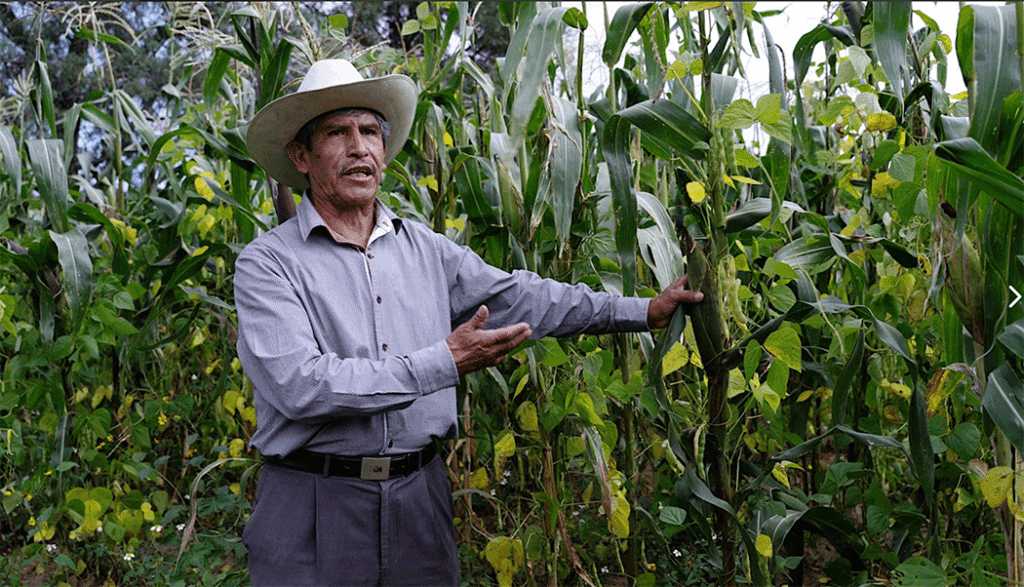
I remember sitting in Oaxaca City eating tortillas made from heirloom maize and realizing how the food carried flavor, texture, and a sense of place. But beyond taste, what stayed with me was the understanding that these varieties of maize represented accumulated human knowledge, adaptation, and cultural memory stretching back thousands of years. That perception deepened through conversations with the people in the film.
Mercedes López of Demanda Colectiva Maíz told me, “We are defending food sovereignty, we are defending a series of rights, the sacred seeds of our people.” Listening to her, I understood that the fight over corn in Mexico was about far more than agricultural policy. It was about defending an inheritance.
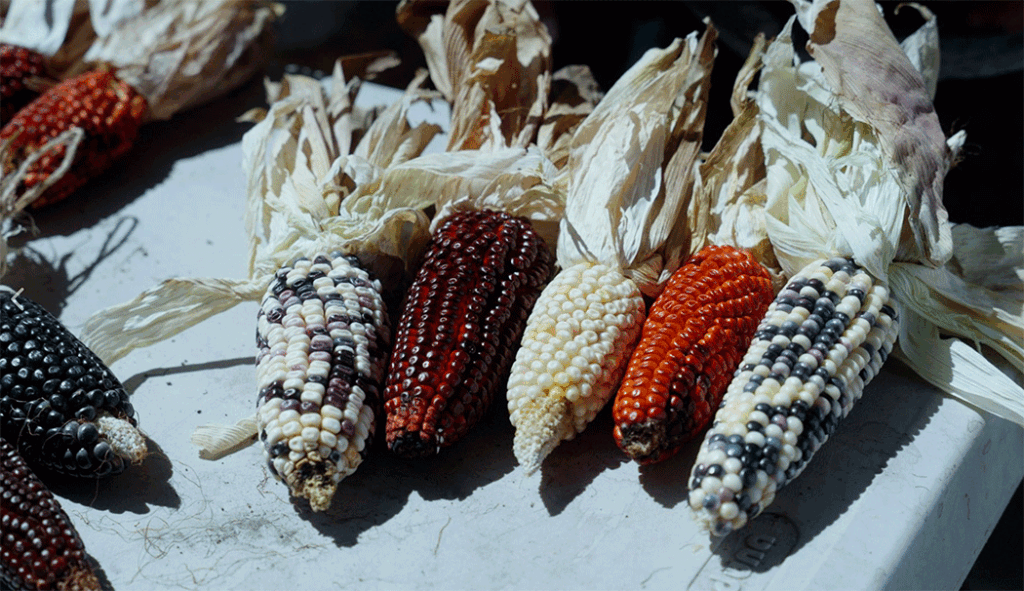
Chef Olga Cabrera of Tierra del Sol in Oaxaca captured another side of the story. She explained how preserving native seeds also means preserving cuisine and health. “How can we help farmers continue promoting and cultivating their seeds, which have been inherited over many generations? By buying and consuming them. . . . we offer our visitors good, healthy food that is free of chemicals and pesticides.”
One of the central ideas that emerged for me during filming was that biodiversity in maize supports biodiversity in cuisine, and that biodiversity in cuisine supports cultural continuity itself. Remove native and heirloom varieties, and something larger begins to disappear: local farming knowledge, regional identity, sacred ceremonies, and connection to the land.
After the U.S. won its USMCA dispute against Mexico in late 2024, Mexico was forced to retreat on some restrictions involving genetically engineered corn in the food chain. But then something remarkable happened. President Claudia Sheinbaum moved to strengthen protections for native maize at a constitutional level, and in March 2025, Mexico formally enacted a constitutional amendment banning the cultivation of genetically modified corn in the country.
To me, that was extraordinary. The fight had moved beyond technical regulation and into the constitutional fabric of the nation itself. Mexico was asserting that maize was not merely an economic commodity but part of its biological and cultural inheritance.
That is one of the deepest themes running through Seeds of Sovereignty—that food policy is never just about trade. It is about sovereignty, identity, health, and a self-determined future.
What we ultimately wanted this film to say is very simple. Seeds of Sovereignty is not anti-farming, and it is not nostalgic fantasy. It is a defense of viable, small-scale, sustainable agriculture that nourishes people, protects biodiversity, and keeps culture alive. It asks whether another model is possible, one that produces food for human beings rather than primarily commodities for industrial systems.
In Oaxaca, we saw what that alternative can look like: living biodiversity, healthy food, strong culinary traditions, and communities still connected to the land around them. That is why we made this film. Not simply to document a dispute over corn, but to ask a much larger question about who controls the food system, who bears the costs of industrial agriculture, and what kind of world we want to leave behind.
The film was made with the support of the Pax Natura Foundation and one of its founders, Randall Tolpinrud, who is a leading light on the issues highlighted in the film.
Stuart Tanner is an award-winning documentary filmmaker, investigative journalist, and writer with extensive experience in broadcast journalism. He has produced documentaries for the BBC, National Geographic, and Frontline PBS.