
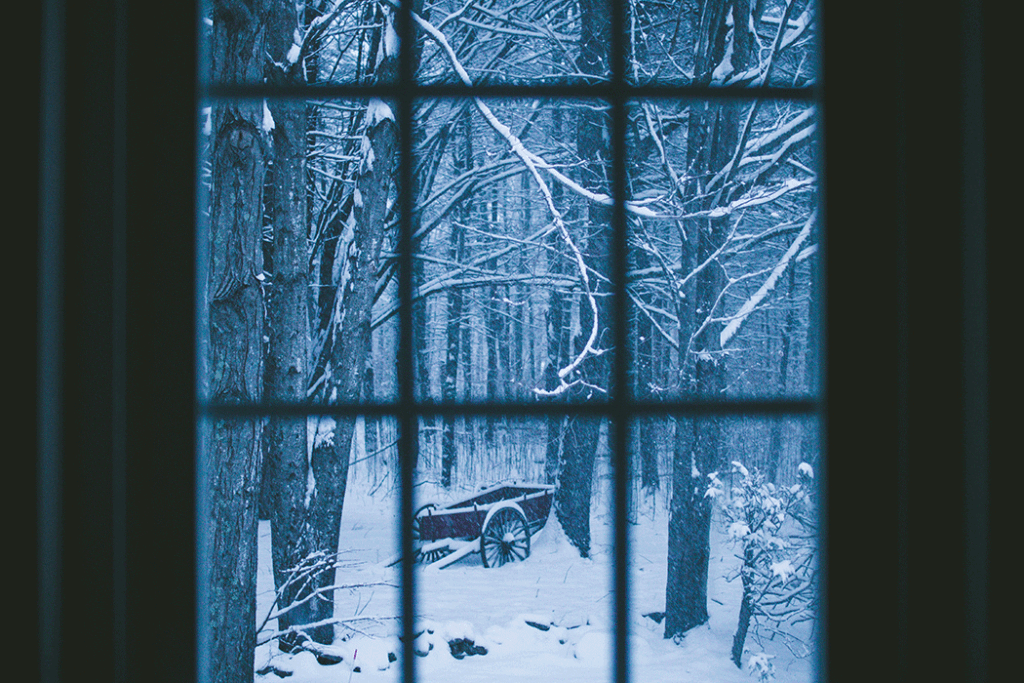
Like every other living creature, we humans are embedded in the planet’s 24-hour circadian rhythm. For half the year, those of us living in the northern hemisphere experience days getting shorter and nights getting longer, with increasing hours of darkness—aka winter.
And 94 percent of us just adjust and get on with our lives. After millions of years living with the sun rising and setting every 24 hours, our brains and bodily systems are so structured in this cycle that we enjoy it as normal life. Most of us, that is.
I said most of us, because for that other 6 percent the winter months can bring on Seasonal Affective Disorder, or SAD. The debilitating winter experience is now recognized as an actual medical disorder, defined and named by Dr. Norman Rosenthal in 1984.
As the days grow shorter, the unlucky 6 percent of folks who are affected by SAD may experience depression, sadness and anxiety, crave sugary and starchy foods (accompanied by unwanted weight gain), have less interest in relationships, need more sleep, and long to curl up in a cave for the winter like a hibernating bear.
The experience of SAD can be incredibly debilitating. Life may lose its sparkle and joy. As Rosenthal says, you may start “feeling worse about yourself because you are not being as productive, sociable, or successful as you usually are.” SAD may be related to the effect that more darkness has on levels of melatonin, the hormone produced by the pineal gland that signals the body to settle down for sleep.
The symptoms of SAD seem to be worse the more northern the latitude. The disorder affects more women than men, four to one, and more younger than older adults. It can also vary in the same person from year to year. It gets people to take winter vacations in sunny southern locations. Oddly enough, it seems to come on most strongly in January and February, when the days are actually getting longer with increasing daylight.
Your doctor should be quite aware of SAD. And, since it’s an established medical condition, insurance should cover effective treatment, which is—light! Aka bright light therapy (BLT). It makes perfect sense. If the problem is less sun, make your own. Get more light into your eyes every day with a BLT light box or two. Or brighten your whole house with several of them. You can buy reasonably priced light boxes that you sit in front of for some time each day, which provide very bright and safe white light.
Dr. Rosenthal recommends light boxes that give off 10,000 lux, which is the measure of light on a sunny day. I’ve ordered a 6″x9″ light box from Verilux (Verilux. com) for my small desk. You can set your light box beside you at as much as a 45-degree angle, which will allow you to work while you use it. It’s best elevated, maybe on a pile of books or a stand, so the light shines down into your eyes like sunlight. Dr. Rosenthal suggests a 12″x12″ box is best. Carex (Carex.com) and SunBox (sunbox.com) offer large boxes that are also elevated and can be tilted. I’m trying a smaller, less costly ($52) 10″x 6″ Verilux that fits on my work table.
Using a light box has been shown to relieve 60 percent of SAD symptoms. That alone will bring enormous relief..
Dr. Rosenthal cautions that you should consult with your doctor if you have any eye problems or bipolar disorder, and recommends not using BLT at all if you have problems with the retina, such as macular degeneration or retinitis pigmentosa.
If you realize that you have been living with SAD, I recommend Dr. Rosenthal’s recent book, Defeating SAD. He goes deeply into the problems SAD creates for you, and even for your relationships, and how to eliminate as much as 80 percent of your symptoms. In addition to the main remedy of a bright light box, he suggests other changes you can make before winter. while you still have the energy to organize and plan:
Daily exercise. Move every day. Walk, jog, dance, sing, stretch, rebound, do yoga. Join a class so you are with other people.
Good friends and Pets. He suggests you let your friends, family, and coworkers know that you suffer from SAD and that you appreciate their understanding. Ask them to pull you out of the house to do fun things. And pets can help you give your love and have love returned.
Meditation. You can practice mindfulness to feel happier. He recommends Transcendental Meditation, or TM, for its effortless practice and release of stress.
Cognitive Behavioral Therapy. CBT can help with the depression that may arise with SAD. CBT has been demonstrated to be as effective or more than other forms of psychiatry and psychiatric medications. Contact the Association for Behavioral and Cognitive Therapies (ABCT) at ABCT.org to find a therapist near you.
Diet. Create a daily diet of fresh food and cut down on sugary, starchy foods. Have warm food and drinks to help your winter digestion. Experiment with herbs and spices, so cooking is fun. Don’t eliminate fats. Your body needs them in winter.
Learn more at NormanRosenthal.com.