
One of last year’s gardening experiments was such a miraculous success … that now I’m a little bit obsessed.
It was an impulse buy at my local farm supply store. I’d gone in for a garden hose, and my wandering eye—the one that is always trying to buy happiness—landed on some cheery-looking seed packets next to the register. I’m approaching that spinstery age when last-second shopping compulsions have officially migrated from the candy bar section to the flower seeds “on sale!”
“Well hello there, Tithonia,” I said seductively, picking a bright packet off the rack. “Should we be friends?” I continued my proposal, “Full disclosure, there’s a good probability you’ll end up in my dusty garage for four years, but there’s also a slight chance I might let you live some semblance of your best life. Care to roll the dice?”
I turned the seed pack over in my hands to peruse the plant’s intriguing features. “Bright red-orange blooms, grows 4–6 feet.” Hmmm, attractive. “Full sun, drought tolerant.” Oh my, tell me more. “Basically thrives on being neglected.” A match made in heaven!!
Slight aside. You’d never suspect I was a certified Master Gardener. That stuff went in one ear and out the other; I’m just not a very good book learner. The only things I retained from the entire four-month crash course a decade ago is that 1) butterflies and moths are part of a biological insect order called Lepidoptera, which is fun to say but not quite as fun to say as Hymenoptera (ants and bees); 2) I lack the confidence, willpower, and “ugliness factor” tolerance to make my own hot compost pile; and 3) on the open-book final exam, I got the multiple choice answer wrong for: “What is the best method for watering house plants?” I still have no clue what the right answer was from among the asinine options: “Every Tuesday”? “With Pepsi”? “When they’re dying”? But back to the plot . . .
The Tithonia seeds miraculously agreed to come home with me—well, Tithonia rotundifolia, if we’re keeping it professional, and “Mexican sunflower” or “Mexican torch” if we’re getting really festive, which in this case is absolutely warranted. As I would come to find out, this flower knows how to throw a serious party!!
I went home and tossed the seeds into the rear patch of one of my garden beds, combed a little loose soil over them, watered ’em once, and then entirely forgot about them. And I do mean f-o-r-g-o-t.
One breezy evening a month later, because I was in the mood, I absentmindedly tore through the same bed with my favorite weeding trowel, omitting what I thought were newly sprouted seeds that had been dropped, poo-style, from the butts of the birds who enjoy perching on my back fence.
It was sheer providence that I missed two, just two, of those seedlings during my weed-pulling rampage—and further divine orchestration that the summer months got away from me and the back portion of that flower bed remained unattended until the height of summer. Those two neglected plants, invisibly thriving behind my forsythia bushes and front-of-the-garden annuals, were, a few months later, as tall and as full as a couple of trees! And, idiot that I am, even then I remember thinking, “Holy smokes, those weeds are HUGE.” But the spirit of adventure took hold of me, and I fortuitously decided to let them live a bit longer—whatever the hell they were—just in case they put out a bloom and turned out to be halfway decent looking.
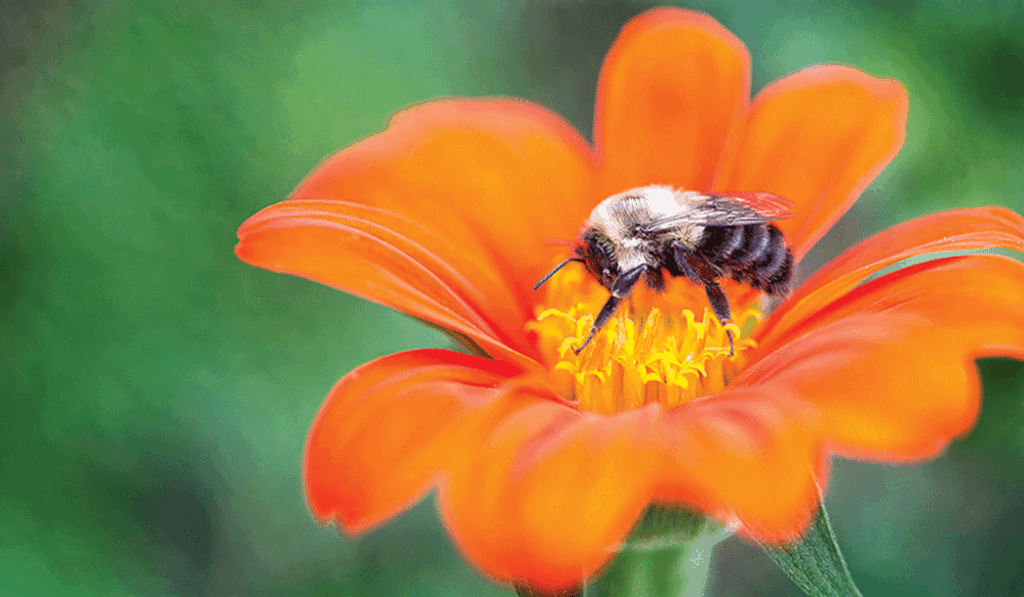
When they reached about seven feet tall, they did bloom—and how. Seemingly overnight, plump, daisy-shaped, electric vermillion blossoms with golden centers burst open all over the things. Imagine my stupefied state as my brain finally did a reboot and I realized that, months before, I’d yanked all but two of my Tithonia plants.
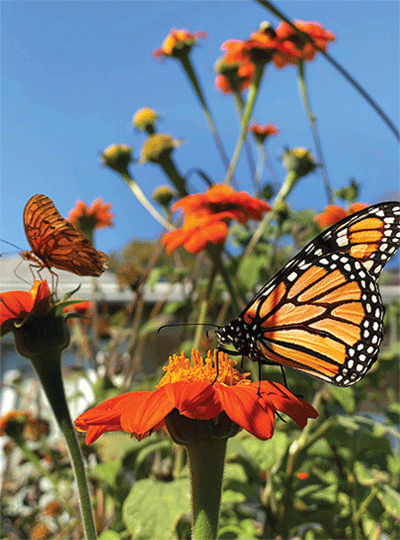
And imagine further: my jaw dropping as I witnessed this pair of torch-covered “trees” become a veritable tractor beam, a homing device, a mega magnet for monarch, swallowtail, and painted lady butterflies. Picture 30 or 40 brilliant, three-inch, hot-red flowers on each plant. And now visualize every single bloom—I kid you not—adorned by a moth, bee, butterfly, or hummingbird. Burgeoning life in a blaze of summer color. Fiesta, indeed!
Those two Tithonia plants thrived next to my back driveway for the rest of the summer and bloomed right up until first frost, providing me with a spectacle of fiery petals and a menagerie of winged creatures to marvel at every damn day. I don’t have people over very often, but I was inviting family, friends, coworkers, and even loose acquaintances to stand in my driveway and witness my flower tower.
Sigh. I’m in love.
It could be that I got lucky. That conditions were just right last year. That those two giant plants thrived on having plenty of space and sun to do their thing. But I’m going for the win again and not taking any chances. I have spread the seeds around from last year’s plants and have beefed up my odds with a fresh pack of heirloom seeds I bought from Seed Savers Exchange. I’m sure I’ll need to thin them out a little—or a lot. But believe me, this year, I swear I’m going to remember they are there. On the off chance I have another late-spring “stroke,” I’ve staked the places where the seeds are. My little ladies in waiting.
Since last October, I’ve been giddily dreaming up a different kind of Mexican wall: a “Wall of Tithonia,” where all god’s creatures are welcome. Because if only two of these plants in my flower bed were breathtaking, just imagine how many butterflies I could get at any given time with, say, a row of ten! If my math is right … that’s at least 300 Lepidoptera. Add a hundred Hymenoptera for some extra buzz. And throw in a dozen Apodiformes for good measure—until those little hummers aim their ruby throats and long, pointed beaks toward actual Mexico come fall.
You can find Tithonia seeds at many garden and farm supply stores, the At Home Store in Fairfield, and online at SeedSavers.org (based in Decorah, Iowa), ReneesGarden.com, and on Etsy.
