
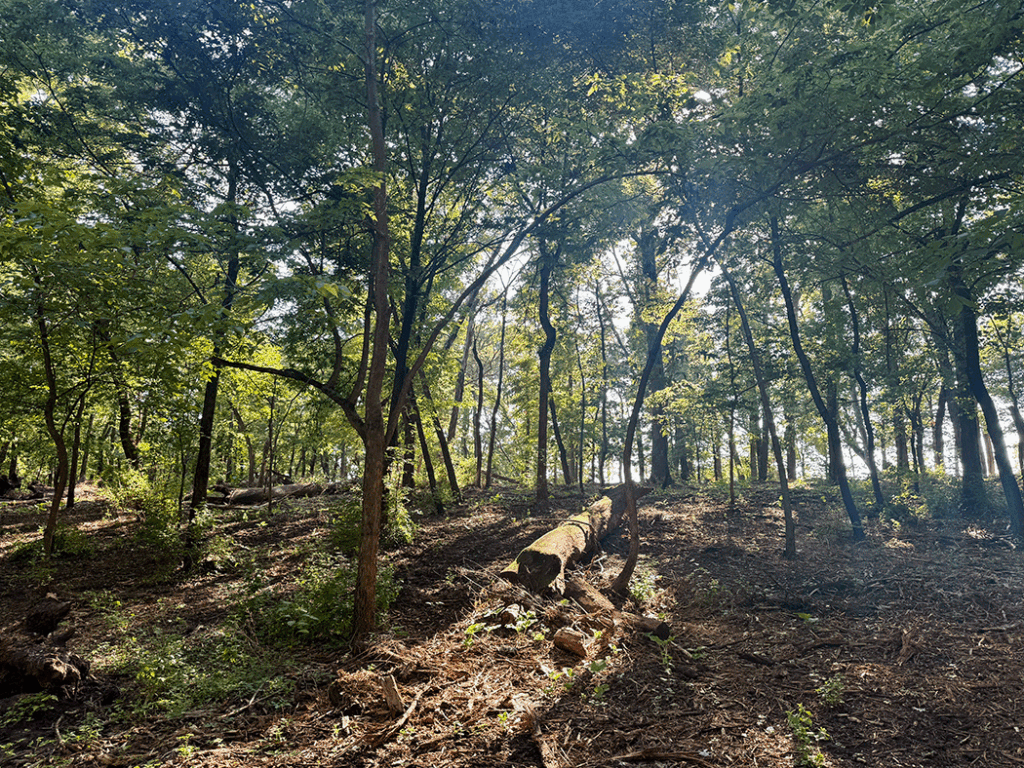
Visitors to Old Settlers Park and Waterworks Park in Fairfield may have noticed recent changes to the landscape—areas that look more open, brush that has been cleared, and signs of active management. While these changes may seem sudden, they are part of a carefully planned effort to restore the health of the forest and better reflect the landscape that once surrounded one of Jefferson County’s most historic sites.
In the spring of 2024, a forest stewardship plan was developed for the property with guidance from the Natural Resources Conservation Service. The plan focuses on promoting a healthy and productive woodland that protects soil, supports wildlife, and provides a quality outdoor experience for the public. A key goal is to encourage the regeneration of oak trees and other desirable native species by allowing more sunlight to reach the forest floor—something that has become increasingly difficult over time.
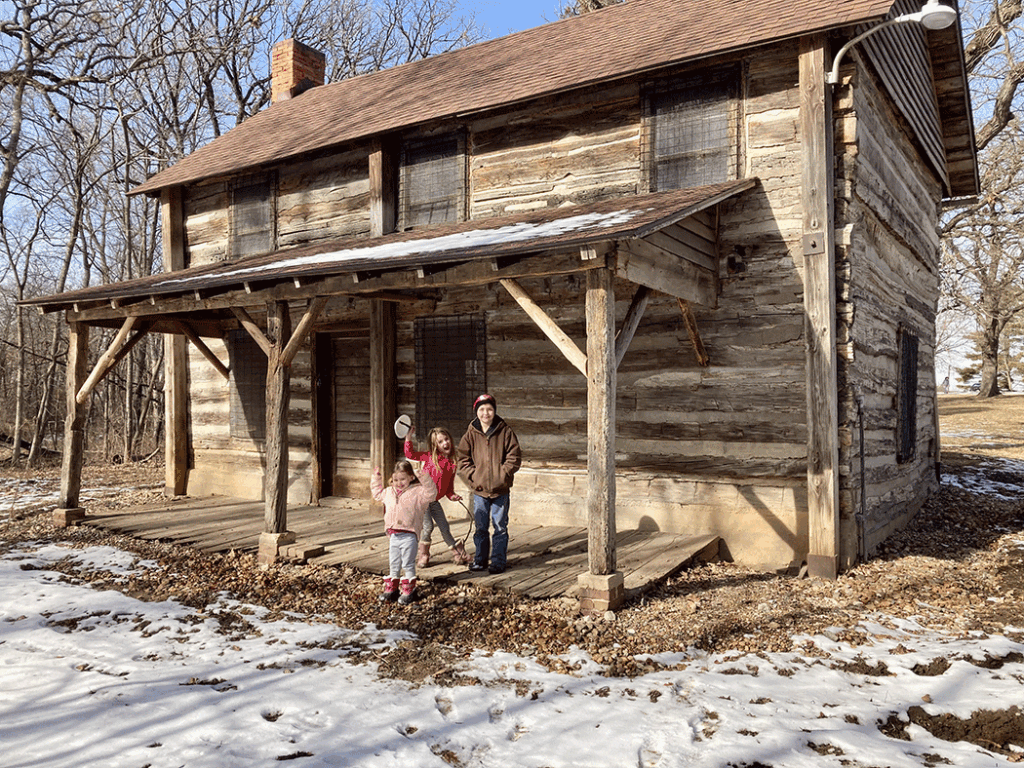
Old Settlers Park is home to Iowa’s oldest existing two-story log house, Bonnifield Cabin, originally built in 1838 and relocated to its current site in 1907. In recent years, the Jefferson County Historic Preservation Commission has been actively working to raise funds to restore the cabin and preserve its legacy. Their efforts have not only focused on the structure itself, but also on improving the surrounding landscape—recognizing that the setting is an important part of the story.
Over time, that landscape has changed significantly. Invasive plant species and shade-tolerant trees have filled in the understory, crowding out native vegetation and preventing young trees from establishing. Today, much of the forest lacks the diversity and regeneration needed to sustain itself into the future. In many ways, the current project complements the work of the Historical Preservation Commission by helping restore a more natural and historically representative environment around the cabin.
To address this, the first phase of the project focused on removing dense invasive growth using mechanical equipment, including a forestry mulcher. This initial step opened the forest and created the conditions needed for native plants and tree seedlings to return. Follow-up treatments over the next couple of years will target regrowth of invasive species.
This work is being supported by a grant through the Iowa DNR focused on improving habitat for bats. While the process may look disruptive in the short term, it is an important step toward restoring balance to the ecosystem—helping native plants, insects, and wildlife thrive once again.
In many ways, this project is about more than forest management. It’s about honoring the history of this place. By restoring the woodland to a healthier, more natural condition, we move closer to the kind of landscape that early settlers would have experienced—one shaped by sunlight, native plants, and open understories rather than dense thickets of invasive species. With time, patience, and continued care, Old Settlers Park will continue to grow into a space that reflects both its past and its future.